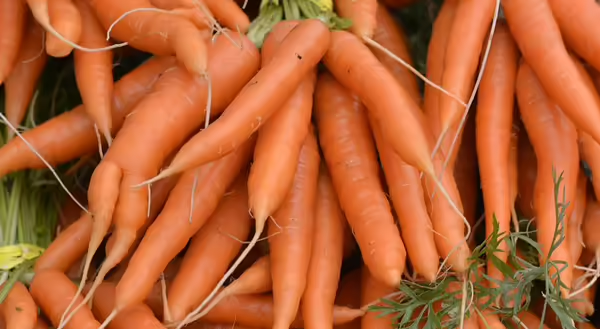
Mid-August is Prime Planting Time for Fall Garden Crop of Carrots and Beets
Mid-August is one of my favorite times to plant things in the vegetable garden. August is a great time to plant carrots and beets because they are typically ready in time for October or November soups, stews, and sheet pan roasts. However, some gardeners struggle with achieving success in direct-seeded root crop production. Check out these tips and tricks to turn your late summer garden into a backyard beet (or carrot) buffet, come fall.
The first step is choosing the right variety of carrot or beet. Because the growing season is getting shorter each day, look at the "days to maturity" or “DTM” listed on the seed packet. You’ll want to select varieties that mature relatively quickly.
Many carrot and beet varieties are ready in 50 to 70 days, making them well-suited for late-summer planting in Illinois. Purchase seed from your favorite local garden center if available, or order from a reputable seed company – but don't spend too much time searching. At this point in the season, getting seed into the ground as soon as possible is far more important.
Good soil preparation is very important, especially for carrots. Root crops develop best in loose, well-drained, amended soil that is free of rocks, clods, and heavy compaction. Before planting, loosen the soil 8 to 10 inches deep using a garden tiller or simply work the bed thoroughly with a digging fork, garden fork, trowel, etc. Incorporating a layer of finished compost into the top several inches of soil can help improve soil structure, making it easier for roots to grow long and straight. Avoid adding fresh manure or high rates of nitrogen fertilizer, which can encourage excessive leafy growth – though a little general-purpose fertilizer would not hurt.
Once the seedbed is prepared, rake the surface smooth. Use a hoe handle, stick, or the corner of a garden rake to draw a straight, but very shallow furrow. Carrot seed should only be covered with about one-quarter inch of soil, while beet seed can be planted slightly deeper. Sprinkle seed evenly down the row, gently covering seeds with fine soil, and lightly compact soil surface to improve seed-to-soil contact.
The biggest challenge most carrot or beet growers face is achieving good germination. Carrot and beet seeds must remain consistently moist while they sprout, which can take one to two weeks depending on weather conditions – or more. The soil surface should never be allowed to dry completely, but it should not remain saturated either. Irrigate every 24 hours, briefly, until germination occurs. Then every 2-3 days as needed. Failure to do this will result in patchy crop growth and small, irregular root development as the roots search for water.
Often, people overestimate how much row-feet they need to dedicate to direct-seeded root crops to feed their families many weeks of carrots or beets. Start with perhaps two 10-ft rows of each, and plant more next year if you need to. Don't be discouraged if you end up sowing too heavily. Both carrots and beets are commonly overplanted because the seed is so small. Once growth of root crops quickens and roots are half the thickness of a pencil, hand-thin the plants to provide adequate spacing for adequate root crop development, leaving a few inches of row space between each root. Although thinning may feel wasteful, overcrowded plants compete for space, producing small, misshapen roots instead of large, uniform ones.
Weed control is equally important – especially during the first month of growth. Young carrot seedlings in particular grow slowly and can easily be overtaken by weeds. Pull weeds while they are small and cultivate carefully between and alongside rows to avoid disturbing developing roots. Use hoes or weeding tools to weed right up alongside planting rows.
As cooler temperatures arrive, your patience will be rewarded. Carrots and beets tolerate light frosts well, and cool autumn weather often improves their flavor by encouraging the plants to convert starches into sugars.
Even if an unusually early frost damages the leafy tops, don't panic. If the root crops have developed, they are often perfectly harvestable beneath the soil surface. In fact, those cool October nights may produce some of the sweetest carrots and beets you've ever tasted—perfect for roasting alongside other fall vegetables for the dinner table.
WRITER: Nick Frillman is a Local Food Systems & Small Farms Extension Educator, covering Livingston, McLean and Woodford Counties.
ABOUT EXTENSION: Illinois Extension leads public outreach for University of Illinois by translating research into action plans that allow Illinois families, businesses, and community leaders to solve problems, make informed decisions, and adapt to changes and opportunities.
###
COLLEGE OF AGRICULTURAL, CONSUMER & ENVIRONMENTAL SCIENCES
University of Illinois | U.S. Department of Agriculture | Local Extension Councils Cooperating
University of Illinois Extension provides equal opportunities in programs and employment.
If you need a reasonable accommodation to participate in this program, please contact us.