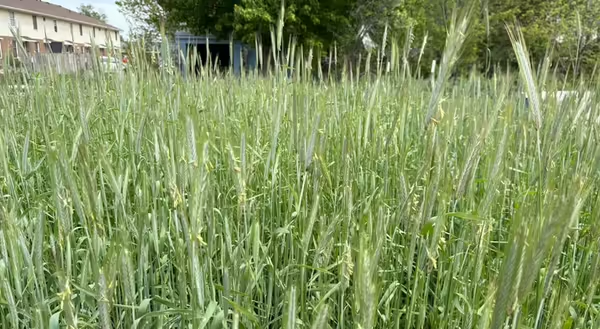
Plant cereal rye this fall and prepare garden soil for success in 2027
October signals harvest time across Central Illinois, with some fields already picked by late September. In years where corn harvest is early enough, farmers have ample time to plant a cover crop before soybeans next year if they choose. Cereal rye is the most popular option because it establishes relatively easily with a bit of moisture, tolerates winter conditions, and resumes growth in the spring.
Cereal rye growth – if established well and terminated correctly – can generate substantial biomass. It scavenges residual nutrients from the soil profile, reduces soil compaction, increases organic matter, improves soil aggregation, and helps protect the soil from erosion during heavy spring rain.
Those factors – “if established well and terminated correctly” can be some points of hesitance for grain growers – rightly so. It may not rain after seeding. Flown on cover crop seeds rather than drilled seeds need a higher application rate to account for lower germination rate on soil surface. And yes, termination of cereal rye especially via burndown chemical management can fail especially if applied when temperatures, windspeeds, or plant growth is sub-optimal.
Home gardeners, however, have more tools in the toolbox to make sure that cereal rye establishment and termination are successful – and can therefore expect to take more regular advantage of a cereal rye cover crop’s potential benefit.
Consider sowing cereal rye this early October for a healthier, more productive garden soil ready for the growing season ahead in 2027.
How to establish a cereal rye cover crop test plot
Purchase 4 pounds of cereal rye seed per 1000 feet square of garden test plot area at a local garden center. The only additional equipment needed for garden cover crop seeding is a rake and a sprinkler. Optionally, gather straw, compost, dry cut grass, etc.
If the target plot has warm weather plants still growing, it may be necessary to sacrifice a few weeks of production for this technique to work. If in a tomato patch, cut the plants off at the base so they don’t shade the soil, and let the green tomatoes ripen on the counter.
Rake up the soil so the seeds have little pockets of disturbed soil to fall into. As evenly as possible, broadcast purchased seed across the area. A denser seeding of cereal rye is desirable, due to the potential for some germination failure. 4lbs per 1000 sq. ft. is sufficient for this goal.
If straw, compost, dry lawn clippings, etc. are on hand, add ¼” of any similar material on top of broadcast seed. If no material is on hand, no matter. Irrigate the test plot with a sprinkler every 48 hours for 15-20 minutes until cereal rye is 6” tall. At that point, plants can generally tolerate rainfed-only conditions – unless drought conditions persist – until winter.
Winter dormancy and spring regrowth
Cereal rye will go dormant once temperatures approach freezing overnight and/or sunlight wanes drastically in December. Plants will brown back to the roots during hard freezes, but the growing point of plants remain alive, yet dormant. Come late February, gardeners will begin to see green return to aboveground plant matter and will see true growth begin in early March. In March through April, plant growth explodes, regularly achieving waist-high results by later April. Sit back, relax, and watch this process of green-up in late winter through early spring.
Termination and residue management
This part is important for gardeners to get all the benefits of cereal rye, but without the potential for regrowth after attempted termination – when they’ve already set out their transplants in the garden…
Terminate cereal rye either by mowing or string-trimming down to the soil line, or by “crimping” – laying down all the cereal rye plants in one direction on the soil by snapping their stems with a metal garden T-post.
Regardless of the chosen method, the next step is mandatory. Cover mowed, string-trimmed, or “crimped” cereal rye with a silage tarp – a heavy-duty type of black plastic tarp that can be purchased at most farm stores – and seal the edges taught against the soil with bricks, stones, sandbags, or anything on hand – even spade-fuls of soil! The tarp must be secure to the point it will not come up even in spring storms.
The silage tarp must be applied for a minimum of 4 weeks to achieve near-certain termination of the growing point of the rye plant. Most gardeners want to plant in May sometime, and working backwards, that means that if a May 21st planting date is desired, termination and tarping would need to occur around April 21st.
The tarping is essential, because terminating rye prior to its reproductive phase spurs regrowth, which can compete with garden transplants or direct-seeded crops. However, the month-long silage tarp application allows plants to attempt regrowth, give up the ghost, and actually die, so gardeners get all the soil health benefits with none of the drawbacks.
The importance of fertilizer for subsequent crops after cover crop
All plant residues have what’s called a C:N ratio or Carbon to Nitrogen ratio. The C:N ratio of a finished compost is frequently about 20-25 parts carbon to 1 part nitrogen, which is desirable from a soil biological activity standpoint. The higher the carbon to nitrogen ratio of a material, the harder it will be for soil microbes to break it down and use it. Because cereal rye is a grass, it’s C:N ratio is higher than a legume-type cover crop such as forage pea.
According to Penn State Extension, the C:N ratio of cereal rye when terminated in spring can be between 40:1 and as high as 80:1. What this can cause in the subsequent crop (such as warm-season transplants of tomato, pepper, etc.) is nitrogen tie-up. The high carbon amount will pull in microbial sources of nitrogen from the surrounding soils to try and lower that ratio, which will leave the immediate vicinity short of necessary nitrogen that heavy feeder crops may need to begin growing rapidly. The simple and easy solution to this is to be sure and broadcast, then lightly incorporate a nitrogen-containing fertilizer such as blood meal or pelletized chicken litter, prior to or at planting of the next crop following the cover crop. This will prevent plant stunting but allow gardeners to avail themselves of the benefits of a cereal rye cover crop.
Alternatives, word of caution, and encouragement
If gardeners want to try cereal rye, don’t like the sound of the silage tarp, and possess a tiller, they can simply grow the rye as described, wait for a dry period in April, mow/string-trim, and then till in the residue. Tillage will kill growing points of cereal rye, and residue worked into soil will feed microbes.
If gardeners are unsure if this interesting option is the right fit, it’s always a good idea to start small with a test plot area and expand into larger planting areas in following seasons if results are satisfactory.
Finally, beyond the soil health and ecosystem benefits that cereal rye can convey, it is very refreshing to see green growing plants in the fall when many others have browned, and again in the spring to see green after months of a landscape filled with brown, white, and grey.
WRITER: Nick Frillman is a Local Food Systems & Small Farms Extension Educator, covering Livingston, McLean and Woodford Counties.
ABOUT EXTENSION: Illinois Extension leads public outreach for University of Illinois by translating research into action plans that allow Illinois families, businesses, and community leaders to solve problems, make informed decisions, and adapt to changes and opportunities.
###
COLLEGE OF AGRICULTURAL, CONSUMER & ENVIRONMENTAL SCIENCES
University of Illinois | U.S. Department of Agriculture | Local Extension Councils Cooperating
University of Illinois Extension provides equal opportunities in programs and employment.
If you need a reasonable accommodation to participate in this program, please contact us.