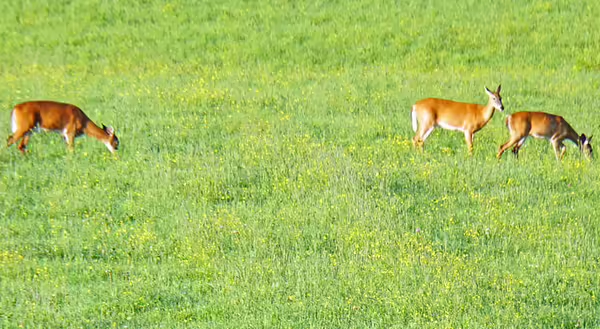
A Budget-Friendly Beginner Food Plot for Central Illinois Whitetail Deer Season
The October 1st whitetail deer season opener is just a few months away for avid Illinois bowhunters. For those like me that are fortunate to manage and hunt a few private acres together with friends or family, it’s about now that we start thinking about planting some small but mighty food plots to attract deer to the property. Food plots can give hunters better odds of feeding our families some Illinois-grown venison by attracting deer to areas easiest for hunters to execute a shot. But more importantly, food plots give the surviving deer another food source to help them get through the toughest parts of winter. Let’s dive in.
Many hunters assume a successful deer food plot – basically a glorified cover crop stand – requires expensive equipment, specialty seed blends, and lots of fertilizer. Fortunately, that's not the case. With a little planning, you can establish an effective food plot starting this September using locally available seed, minimal tillage, and common garden equipment.
For central Illinois, early September can be an excellent planting window. Soil temperatures are still warm enough for rapid germination, while cooler fall weather helps many forage species thrive later. That said, September can also be hot and dry, so giving your food plot every advantage is important.
Preparing the ground
The simplest way to kill existing vegetation and prepare a food plot is to spray it about one week before planting with a homeowner-labeled burndown herbicide. Always choose the right size of equipment for the treatment area, read and follow the pesticide label, wear the recommended personal protective equipment, and keep the wind at your back when applying any herbicide.
After herbicide application, wait one week, then mow or string-trim the dead vegetation short, if necessary. Then use a sturdy garden rake, rear-tine tiller, or preferred soil disturbance implement to expose small amounts of soil and rough up the ground. This will help broadcast seeds find their way further down into the soil, enhancing germination success.
Avoid products containing residual herbicides, as they may interfere with seed germination. Always be very intentional about where you are applying these products and try to set the stage for semi-permanent food plot areas so that the smallest possible but effective area need be sprayed, tilled, etc.
Alternatively, if a tillage implement is on-hand, and a small tractor, light tillage is a good spray-free way to disturb the soil and enhance cover crop germination, if summer weeds are not too large.
What seed to use?
Rather than purchasing an expensive wildlife seed blend, consider asking your local farm supply store, garden center, or seed dealer to help you create a simple mix from species. Oftentimes you’re not the first to have asked them, and they have formed relationships with other businesses to help their clients.
Buying seed locally is often cheaper because you save on shipping. You can also possibly adjust the blend based on local availability or your own personal interest. Call your local garden center or seed dealer to discuss options – but do it soon, so it can get ordered if need be, and planted ASAP.
A good beginner mix for early September might include:
Oats (30-35%) for rapid fall growth and attractive early-season forage that will winter-kill
Cereal rye (20-25%) for slow to medium fall growth and lush spring regrowth
Tillage (forage) radish (10–15%) for attractive fall forage that loosens soil and winterkills
Purple top turnips (10–15%) for quality late-season forage after frosts – deer will dig these up to eat
Medium red clover (20–25%) to establish a perennial food source beneath the annual crops and provide nutritious forage the following spring for deer and wild turkeys
Winter kale is another great option for hardy (to -5F) green forage that will pull in deer.
For best results, 40lbs of seed per acre should be minimum baseline. For small plots, my general rate I’ve had success with is 4-5lbs per acre, especially if broadcasting the seed into barely disturbed ground, or if the forecast is calling for hot or dry conditions soon after seeding. This will account for loss of seed due to poor conditions or poor seed-soil contact.
Where to plant the food plot?
A tenth-acre or quarter-acre plot – which sounds small – is plenty. In fact, smaller plots are less expensive, easier to maintain, and often easier to hunt effectively. Rather than trying to plant a large acreage, focus on placing a smaller plot or two near to where deer naturally travel, near tree stand locations, or etc.
Look for funnels between woodlots, field corners, low spots, pinch points, or other travel corridors that naturally bring deer within range. A well-placed but small plot will often outperform a poorly located one-acre plot.
Don't overlook partially shaded locations. A few hours of afternoon shade can help the soil retain moisture during August heat. Morning dew also tends to linger longer in shaded areas, sometimes providing just enough additional moisture to help seedlings survive a dry spell.
How to plant – and heavier seeding rate when possible
A hand-crank broadcast spreader worn over your shoulder is usually all the equipment needed for plots up to about an acre. A small cone spreader mounted on the back of an ATV also works well. Whether you spray to kill vegetation or till it, early August is one of the hottest times of the year. Don't be afraid to overseed – and in fact, consider purchasing enough seed for up to a 2x rate for your space if your budget allows it. The heavier seeding rate helps compensate for seed that never makes adequate soil contact or doesn't receive enough moisture to germinate. And, if possible, time planting just before a forecasted rain.
For many first-time food plotters, a hand-pump sprayer or tiller, a rake, a wearable broadcast spreader, inexpensive seed, and timely rainfall are all it takes to establish an attractive fall food plot that also provides spring forage for deer and wild turkeys. Small, well-located plots that are seeded generously often provide the greatest return for both budget and hunting success.
Whitetail deer food plots give new meaning to “local food systems & small farms” – by helping hunters to harvest a prime protein source on-farm that can help feed their families all year – as well as feeding the deer that make it through hunting season. Try it out this year and see if it’s right for your property.
A quick disclaimer: food plots supplement natural habitat—they don't replace it. Properties with quality cover, native vegetation, and diverse natural food sources generally support more wildlife than food plots alone. Connect with Illinois Extension field staff to learn more about enhancing native natural habitat on your property.
WRITER: Nick Frillman is a Local Food Systems & Small Farms Extension Educator, covering Livingston, McLean and Woodford Counties.
ABOUT EXTENSION: Illinois Extension leads public outreach for University of Illinois by translating research into action plans that allow Illinois families, businesses, and community leaders to solve problems, make informed decisions, and adapt to changes and opportunities.
###
COLLEGE OF AGRICULTURAL, CONSUMER & ENVIRONMENTAL SCIENCES
University of Illinois | U.S. Department of Agriculture | Local Extension Councils Cooperating
University of Illinois Extension provides equal opportunities in programs and employment.
If you need a reasonable accommodation to participate in this program, please contact us.