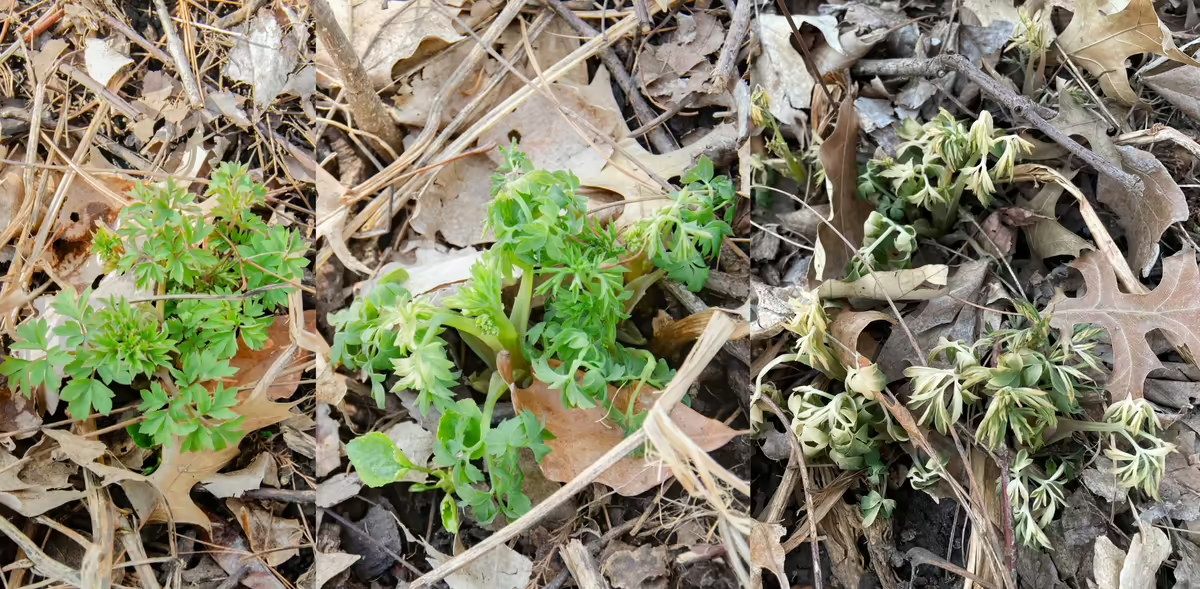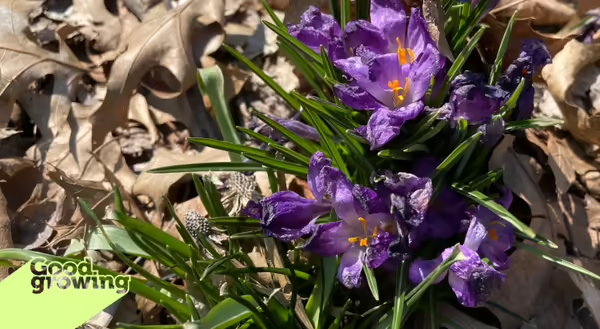
Early spring often brings unpredictable weather, from 80-degree days to temperatures well below freezing. While many plants are adapted to withstand cold temperatures when dormant, they become far more vulnerable once they begin to emerge from dormancy. While early‑emerging plants such as bulbs and tree fruit can tolerate cold temperatures, if temperatures drop too low, they can be damaged.
Dormancy and Early Growth
Plants enter dormancy in the fall, triggered by short days and freezing temperatures, as a way to protect themselves from harsh winter conditions. This type of dormancy is called endodormancy. Plants will remain dormant until they are exposed to cold temperatures for a sufficient amount of time (chilling requirement). This helps prevent the plants from ‘waking up’ during warm spells during the winter.
However, once plants accumulate enough chilling hours, usually temperatures between 32°F and 45°F, they will leave endodormancy and enter ecodormancy. During ecodormancy, the plants remain dormant while temperatures remain cold, but once the weather begins to warm (into the mid-40s for tree fruit), they are triggered to break dormancy, buds begin to swell, and growth resumes.
As plants move from endodormancy into ecodormancy and eventually into active growth, their cold tolerance declines. Buds, flowers, and young shoots become increasingly vulnerable to cold temperatures as development progresses. This means that unseasonably warm late‑winter weather can push plants into active growth prematurely, leaving them vulnerable to later freezes.
Early Spring and Fruit Crops
The number of chilling hours a plant needs to break ecodormancy depends on the species and cultivar being grown. A good example of this is fruit crops:
- Apple 800 to 1750
- Raspberry 800 to 1700
- Pear and sour cherry 600 to 1500
- Currant and gooseberry 800 to 1650
- Walnut 400 to 1550
- Plum (Japanese) 600 to 1600
- Pecan 650 to 1550
- Cherry (sweet) 500 to 1450
- Blueberry (highbush) 800 to 1250
- Peach 375 to 1200
- Apricot 300 to 1000
- Blackberry 350 to 600
- Grape 50 to 400 (adequate growth) 400 to 1650 (better and faster growth)
- Strawberry 50 to 300
It’s best to grow cultivars with chilling requirements similar to the number of chilling hours an area receives. In Illinois, we typically receive between 1,100 and 1,700 chilling hours per season.
Peaches and apricots, which have lower chilling requirements and will bloom earlier in the season, are especially prone to injury. Fruit like apples and pears break dormancy later, reducing the chances they are exposed to cold weather.
As mentioned earlier, the further along a plant is in development, the more susceptible it is to frost damage. For example, when peach buds begin to swell, 10% of the buds will be killed when temperatures reach 18°F, and 90% will be killed when temperatures are 1°F. When peaches are at the pink stage (flower buds are pink), 10% of buds are killed at 25°F and 90% at 15°F. When peaches reach full bloom, 10% of blossoms will be killed at 27°F and 90% at 24°F.
While cold injury to fruit trees in the spring doesn’t typically kill the tree itself, there is a possibility that, depending on how cold it gets, a plant will produce less or no fruit at all.
Ornamental Plants
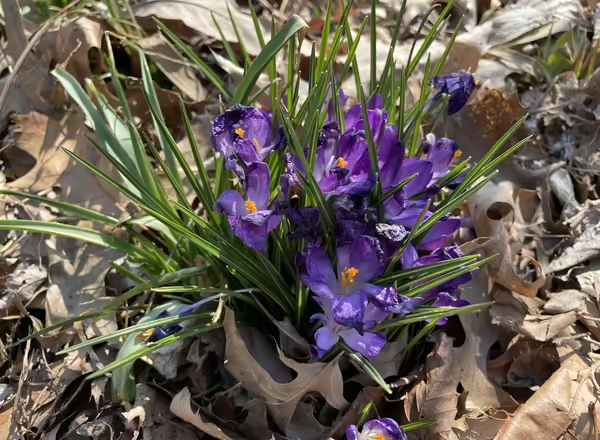
Spring bulbs such as tulips and daffodils are adapted to early emergence and can withstand colder temperatures, often into the upper 20s °F. However, they can still be damaged by colder temperatures, flowers may be killed, and the foliage may be damaged. Fortunately, bulbs should survive because their underground structures remain insulated.
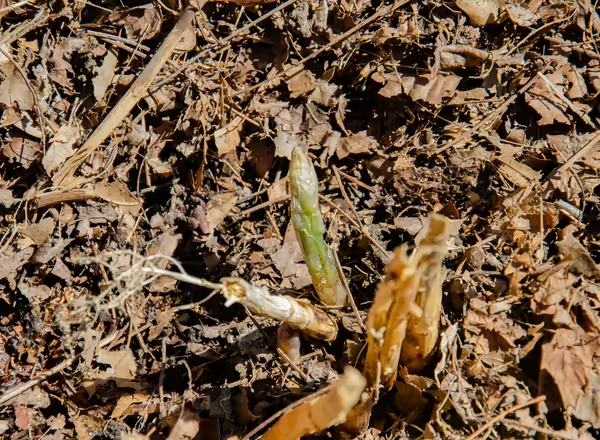
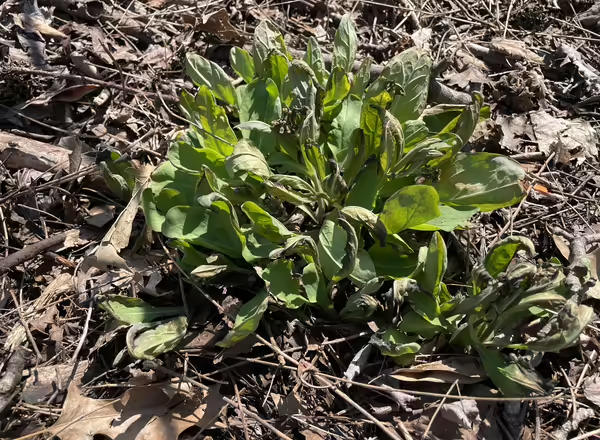
As with fruit plants, early-emerging perennials may have their flowers damaged, leading to reduced floral displays. Plants may also experience leaf burn or dieback of tender new growth. In healthy, established plants, this isn’t much of a concern; these plants will put out a new flush of growth.
What Can Be Done to Protect Plants From Cold Weather?
It usually isn’t necessary to protect early emerging spring perennials and bulbs, since they can tolerate temperatures into the upper 20s °F. While plants can be covered if temperatures are colder, covering plants often isn’t effective once temperatures drop below 28°F. Trees (fruit and ornamental) are typically too large to protect from cold temperatures.
Providing consistent care, such as watering during dry spells, reducing weed competition, and monitoring for stress‑related problems, can help affected plants recover.
Good Growing Fact of the week: Many plants also require a vernalization (chilling) period in order to properly flower.
References and For More Information
Chilling requirements for plants
Michigan State University - Some perennials like it cold (Vernalization part 1)
Utah State University Extension - Critical Temperatures for Frost Damage on Fruit Trees
Want to get notified when new Good Growing posts are available? SIGN ME UP!
Give us feedback! How helpful was this information (click one): Very helpful | Somewhat helpful | Not very helpful
MEET THE AUTHOR
Ken Johnson is a Horticulture Educator with University of Illinois Extension, serving Calhoun, Cass, Greene, Morgan, and Scott counties since 2013. Ken provides horticulture programming with an emphasis on fruit and vegetable production, pest management, and beneficial insects. Through his programming, he aims to increase backyard food production and foster a greater appreciation of insects.