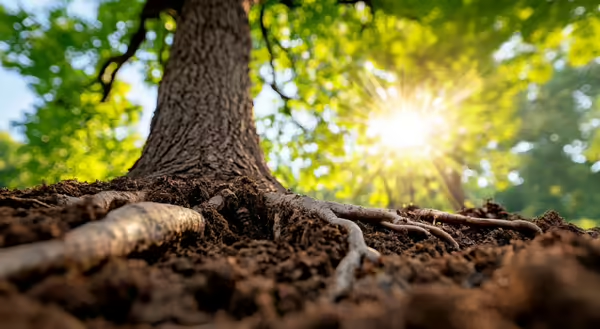
Did you plant a tree this past spring? How about last fall? Do you have a mature tree that you are caring for? If you answered yes to any of these questions, this article is for you because when you are caring for a tree, you are tasked with caring for the above-ground portion and the below-ground portion.
If I’m helping a community member with a tree issue, nine times out of ten, it is related to the above-ground portion. This is understandable; it is the portion of the tree that we can most easily see and access. But what lies below the soil surface is essential for tree health and longevity.
The function of roots
The function of tree roots is multifaceted. They are an anchor to the above-ground portion of the tree, helping to keep it upright against its own weight and the exterior forces of weather. Roots absorb essential nutrients and water from the soil and transport them to other plant parts for use. During the winter months, roots store carbohydrates produced by the previous year’s leaves to use as new spring foliage emerges.
The form of roots
The root system of a tree is comprised of large perennial roots and smaller, shorter-lived roots. Large, perennial roots grow horizontally away from the trunk of the trees and help anchor the tree in the ground. These roots are typically located in the upper eighteen inches of soil, although some species develop tap roots that penetrate deeper into the soil profile.
The largest percentage of the root system consists of small roots that grow from the larger roots near the soil surface. These roots absorb the minerals, moisture, and oxygen that are relatively abundant in the upper soil horizon. These short-lived roots also help build soil structure as they grow, die, and decay, creating pore space and contributing organic matter to the soil. This process regularly repeats itself if the tree is healthy and growing conditions are conducive to root growth.
The reach of tree roots has been observed to spread up to four times (possibly more) as wide as the canopy. From a management perspective, this far-reaching root zone can be challenging. For easier management while still being effective, it is recommended that the root zone below the canopy be prioritized. This zone is often described as extending to the “dripline” of the tree. When taking actions to care for tree roots, it is recommended that the practice be applied, at a minimum, to the area under the dripline. Extending care practices beyond the dripline will increase benefits. Keep in mind that the diameter of the dripline is going to expand as the tree grows. Recommended practices will be concentrated in a relatively small area for newly planted trees. As trees mature, the root zone expands as the canopy does.
Protecting tree roots
Because tree roots are essential to tree health, it is in our best interest to concern ourselves with the roots of a tree as much as we care for the trunk and canopy. What follows is a short list of common challenges tree root zones face and how we can mitigate the challenges.
- Heavy clay or compacted soils are challenging for roots to penetrate, limiting growth. To protect against compaction, limit foot or vehicular traffic over the root zones of trees when soil is moist. On newly constructed sites, ensure that backfill is quality topsoil, not subsoil.
- Changes in soil depth around established trees can reduce the amount of water and oxygen available to roots. Removing soil from existing trees exposes roots to challenging weather conditions and injury. Avoid topography changes near established trees as much as possible and keep to a minimum if unavoidable.
- Changing the plant community below the dripline or adding plants to a mulched area can increase resource competition for resources. Water and nutrients may be utilized by shrubs, grasses, and flowers instead of being available for the tree, resulting in stress. Hardwood mulch spread three to four inches deep below the canopy of a tree mimics natural growth conditions and supports root development.
- Short or long periods of drought can stress all plants in our landscape. Trees are often slow to show signs of drought stress but are adversely affected by the lack of water as much as our other landscape plants. Water trees when natural precipitation is less than one inch per week. Water once in a single session so water penetrates deeper into the soil profile, reaching tree roots. Water using a low flow so water filters into the soil rather than running off the surface to non-target areas.
Caring for trees means looking beyond what we can see and caring for what lies below the soil surface too. Health roots provide the foundation for strong, resilient trees. By understanding how tree roots function, where they grow, and some of the challenges they face in our developed landscape, we can make better decisions about landscape management. Simple actions can make a significant difference in the longevity and overall health of trees.
Good Growing Fact of the Week: The largest tree root system in the world belongs to a clonal stand of quaking aspen in Utah. The organism is a collection of over 47,000 stems all growing from the same root system. The organism is referred to as Pando and spreads over 106 acres.
Thank You for Reading!
Sign up for our emails! Want to get notified when new Good Growing posts are available? SIGN ME UP
Give us feedback! How helpful was this information (click one): Very helpful | Somewhat helpful | Not very helpful
Meet the Author
Emily Swihart is a horticulture educator with University of Illinois Extension, serving Henry, Mercer, Rock Island, and Stark counties since 2021. Emily provides horticulture programming with an emphasis on the home gardener, the urban forest, native plant ecosystems, and landscape design. Additional responsibilities include supporting local county Master Gardener and Master Naturalist volunteers - providing training, continuing education, advanced training, and their involvement in seasonal events and community outreach programs.