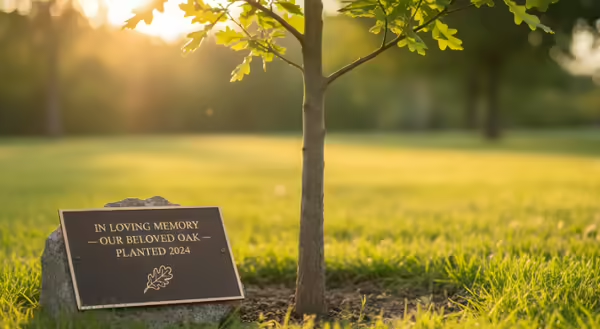
Losing a loved one is never easy. It can be hard to find the right words to say, know the right actions to take to support yourself or those around you, or know how to honor the person. For many, a plant is a thoughtful way to symbolize enduring life, and it gives the grieving family something to hold on to for years to come. From my own experience and observation, houseplants and trees are the two most popular plants to give in memory of someone special.
Why plant a tree?
As the longest-living, largest plants in our landscape, trees are incredible symbols of lasting life and love. Watching trees change through the seasons and grow larger as time passes is a poetic symbol of the enduring impact a person has made in this world.
In addition to the symbolism of a growing tree, modern research has provided insight into the ways nature can provide comfort in times of joy and during life’s more challenging times. Interacting with plants has been shown to reduce stress, improve mood, and support overall well-being. Planting a tree in memory of someone can leverage these existing feelings of comfort to create a place where a living, growing monument becomes a place for remembrance and healing.
Memorial Options
If it has been determined that a tree is an appropriate memorial, there are a variety of ways to plant it. There is no one right way to plant a tree in honor of a loved one, but there are considerations that may influence decision-making.
- Planting a tree at a personal residence
Planting a tree at a personal residence locates the tree nearest to the people who wish to honor a loved one. Adding a tree to a private residence creates increased opportunities for interaction, increasing the benefits of the memorial.
In addition to enjoying the tree, responsibility for the tree’s care falls on the people who live in the home. This can be an advantage or disadvantage depending on the willingness and ability of the residents. It may also be hard to leave the tree behind if the residents move.
- Planting a tree in a community
Planting a tree through a community planting project is a great option if a private residence is not available for planting or if there is a community location that is especially meaningful to the person being honored. Working with a tree committee or municipality can be a source of support and expertise. These experts can help choose an appropriate species for a desired planting site and may be able to help care for the tree long term.
However, trees planted by a city, while well-intentioned, are often not adequately supported. These trees are also exposed to a variety of risks unique to community trees. All of which can lead to an increased risk of failure.
In place of individual trees, I suggest communities establish memorial groves where loved ones can be honored, and a place of solace can be created without connecting a single tree to an individual. A grove may include an area that identifies specific individuals adjacent to the grouping of trees. This type of memorial can create a more manageable system for a community while creating an enduring memorial for the living.
- Donating funds to plant trees through an organization
Partnering with an organization to do a memorial tree planting is a great way to increase the impact of a memorial. Many of the organizations offering memorial plantings use funds to support high-impact plantings or mission work. Arboretums, public gardens, or conservation organizations offer a variety of options so families should do research into how memorial funds are used to ensure satisfaction.
By partnering with an organization, the burden of species and site selection, planting, and maintenance is lifted off the grieving family. It also creates an opportunity for loved ones who live far away to contribute to the memorial through a financial donation.
Considerations
For individuals, municipalities, or organizations facilitating memorial tree planting efforts, special consideration should be given to risk management. Planting a living tree as a memorial automatically attaches additional weight to the success of that tree.
Although true for all newly planted trees, the emotion connected to a memorial tree make developing a care plan especially important. Proper and ongoing care practices such as mulch, winter protection, supplemental watering, and pruning should be determined prior to planting a memorial tree. These activities are an expense beyond the cost of a tree. It is recommended that the memorial funds be sufficient to support these activities.
Finally, families should recognize that trees are living organisms, not permanent monuments. Environmental conditions (weather, insects, disease, etc.) can affect even the most well-cared-for trees. A memorial tree will not last forever. For this reason, memorial trees should be planted with the focus being on the act of planting and stewardship of the environment rather than expecting the tree to last for eternity.
Good Growing Fact of the Week: The information in this article is written regarding planting trees that symbolize the passing of a loved one and are not a direct part of the burial process. A variety of laws and regulations apply to burial sites and the distribution of cremated remains. Please seek guidance from local authorities if remains are being incorporated into a memorial.
Bonus Good Growing Fact of the Week: This article was inspired by the 25th anniversary of the September 11, 2001, attack and the trees incorporated in the memorial. During site recovery, one tree was discovered in the debris and was nursed back to health. That tree is a Callery pear (Pyrus calleryana) and is known as the 9/11 Survivor Tree and remains at the site of Ground Zero. Swamp white oak (Quercus bicolor) trees were selected for the memorial for symbolic and practical reasons.
Thank You for Reading!
Sign up for our emails! Want to get notified when new Good Growing posts are available? SIGN ME UP
Give us feedback! How helpful was this information (click one): Very helpful | Somewhat helpful | Not very helpful
Meet the Author
Emily Swihart is a horticulture educator with the University of Illinois Extension, serving Henry, Mercer, Rock Island, and Stark counties since 2021. Emily provides horticulture programming with an emphasis on the home gardener, the urban forest, native plant ecosystems, and landscape design. Additional responsibilities include supporting local county Master Gardener and Master Naturalist volunteers - providing training, continuing education, advanced training, and their involvement in seasonal events and community outreach programs.