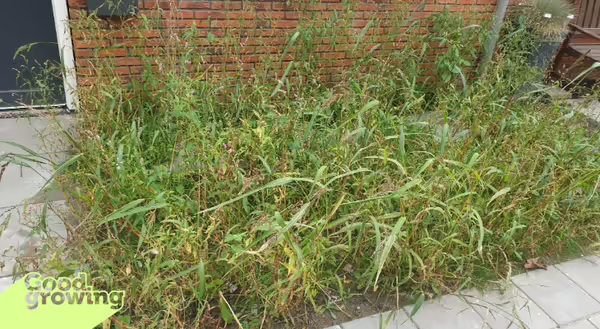
With the arrival of fall, many of our landscapes start to wind down. Flowering plants begin to fade, and trees put on their annual display of fall color. There are plenty of seasonal tasks to tackle, from planting perennials and bulbs to cleaning up the vegetable garden and putting away tools and hoses for the winter. One task that often gets overlooked is managing weeds. However, taking some time to control weeds in the fall can save a lot of time and effort come spring.
Why is fall a good time to manage perennial weeds?
As the days become shorter and temperatures cool, perennial weeds such as dandelions, creeping Charlie, bush honeysuckle, and bindweed begin preparing for winter. They do this by moving sugars and nutrients from the leaves into their roots and underground storage structures (rhizomes, bulbs, etc.). The stored energy helps them survive winter and resume growth in spring.
Because plants are moving resources down into their roots, systemic herbicides (glyphosate, 2,4-D, triclopyr, etc.) are often more effective. These herbicides are absorbed by the plants (usually the leaves) and moved around the plant (including the roots). Because plants are moving resources into their roots, these herbicides can move more easily within the plant and reach underground plant parts, resulting in more effective control. In the spring, plants are directing energy and nutrients upward to support new growth, which can make it more difficult for herbicides to reach roots and other underground storage structures.
In addition to using herbicides, perennial weeds can also be pulled. If pulling, try to get as much of the root system as possible since remaining root fragments may resprout.
Fall is a good time to manage biennial weeds, too
Fall is also an excellent time to manage biennial weeds such as thistle, wild parsnip, and garlic mustard. During their first year of growth, these plants form low-growing rosettes and focus on developing root systems. The following year, they will flower, produce seed, and die. Controlling these weeds in the fall, while they are still in the rosette stage, is often easier and can prevent thousands of seeds from being added to the soil seedbank.
Some weeds are just getting started
While we usually think of weeds germinating in the spring and summer (crabgrass, purslane, plantain, etc.), some weeds begin germinating in the fall. These weeds, often referred to as cool-season or winter annual weeds, include plants like common chickweed, deadnettle, henbit, speedwell, and shepherd’s purse.
Winter annual weeds will begin germinating in late summer and fall. The plants will continue growing until a hard freeze. These weeds are often first noticed when they begin flowering in early spring, but by then, they have already been growing for several months. When the weather warms in the spring, the plants will resume growth, flower, produce seeds, and die in late spring or summer. Therefore, managing these weeds now, in the fall, can greatly reduce the number of weeds present in the landscape come spring.
Preventing seed formation
Regardless of whether the weeds are perennials, biennials, or annuals, it’s important to prevent them from producing and spreading seeds.
One of the reasons many weeds can be so problematic is that they can produce an incredible number of seeds. For example, common chickweed produces, on average, 25,000 seeds per plant; crabgrass can produce 100,000 to 150,000 seeds per plant; while a single purslane plant can produce 2 million seeds. Additionally, many seeds can remain viable for years or even decades in the soil.
So even if it’s not possible to remove the entire plant, removing the flowers and seedheads can go a long way in reducing weed populations. Avoid putting seedheads in compost piles, as backyard composting usually does not get hot enough to kill seeds.
Managing weeds in the fall
Like other times of the year, weeds can be managed in a variety of ways in the fall, including hand pulling, cultivating, and using herbicides. While cultivation can be an effective way to control small weeds, it can also bring buried weed seeds to the surface, leading to a new flush of weeds. When cultivating, try to disturb the soil as little as possible to prevent this.
When applying herbicides, make sure weeds are still actively growing and have healthy green leaves. Applications made after a hard frost or after leaves have been damaged by cold temperatures may be less effective.
Mulch can also be an effective tool for preventing weeds. Applying a 2- to 4-inch layer of mulch in the fall can help suppress weed germination the following spring. In a vegetable garden, cover crops can be planted to outcompete and/or smother weeds.
Good Growing Tip of the Week: When using herbicides (or any pesticide), make sure to read and follow all label directions. The label will tell you what weeds will be controlled, when to apply, how to apply, how much to apply, personal protective equipment needed, and more.
Want to get notified when new Good Growing posts are available? SIGN ME UP!
Give us feedback! How helpful was this information (click one): Very helpful | Somewhat helpful | Not very helpful
MEET THE AUTHOR
Ken Johnson is a Horticulture Educator with University of Illinois Extension, serving Calhoun, Cass, Greene, Morgan, and Scott counties since 2013. Ken provides horticulture programming with an emphasis on fruit and vegetable production, pest management, and beneficial insects. Through his programming, he aims to increase backyard food production and foster a greater appreciation of insects.