Recently I led a three-day online course on grass identification. Thanks to those of you who participated!
One of the things I focused on is how sometimes just identifying to a genus level is “good enough” or tells us enough information that we need in order to make management decisions about promoting or removing a species. But it can also be fun (and helpful) to look at the smaller differences that we find between species within one genus. Today we’ll look at the Panicum genus in Illinois.
There are 11 species listed in this genus in Illinois on the USDA Plants Database. We’re going to look at the three most common ones that you are likely to encounter in the state, as they are found in nearly every county in Illinois.
Switchgrass – Panicum virgatum
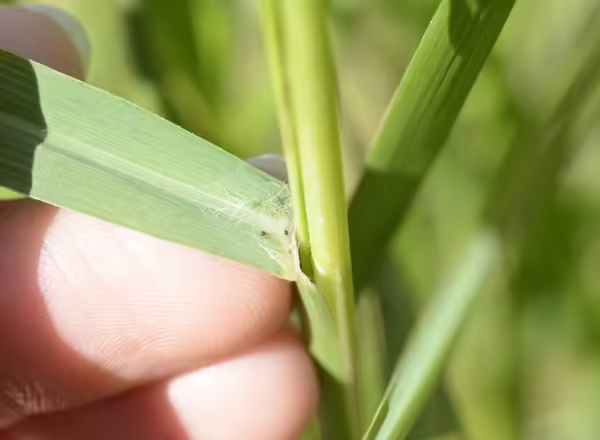
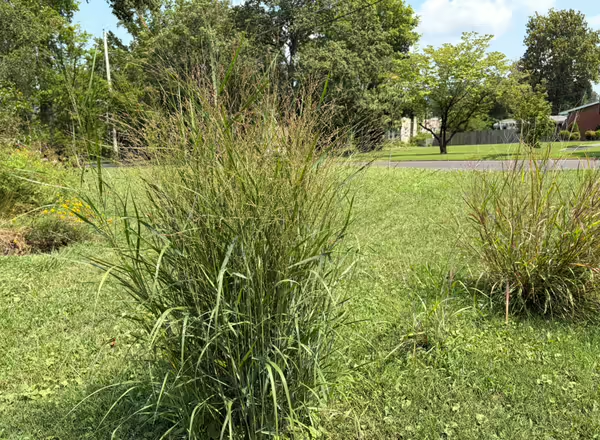
Maybe the Panicum you are most familiar with is Switchgrass. Once one of the dominant grasses of the tallgrass prairie, it is also a biofuel grass. Switchgrass, unlike many of the other Panicums, is a perennial warm-season grass. It grows in bunches and can get 4-6 feet tall. The easiest identification factor I use is to look for a triangle-shaped collection of white hairs at the base of the leaf blades. It makes a panicle inflorescence (branched flowering cluster) that is often over 1 foot tall.
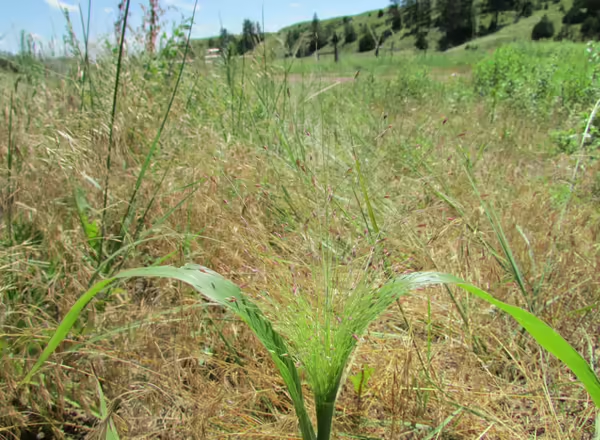
Witchgrass – Panicum capillare
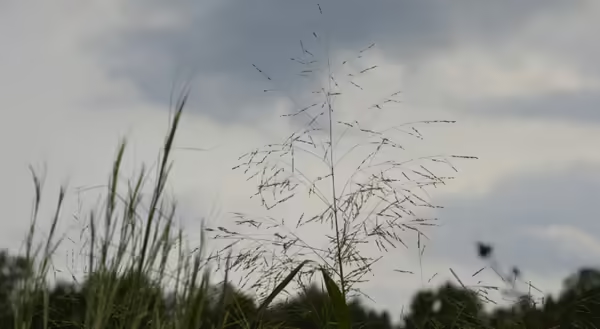
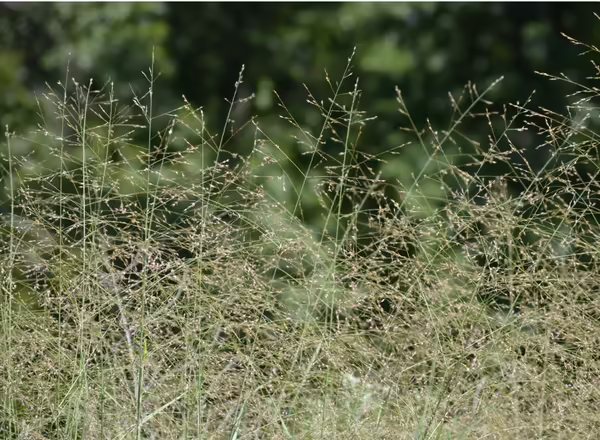
Witchgrass is a native summer annual found in disturbed areas, fields, and glades. This grass stays pretty short, usually between 1 and 3 feet tall, but usually half of the height comes from the panicle inflorescence! It has a very large spray of branches that emerges right from the base of a leaf. Other identification features you can look for includes long spreading hairs on the leaf sheaths and hairy ligules at the base of the leaf blades. This grass is sometimes referred to as a tumbleweed because the whole panicle can break off and tumble away.
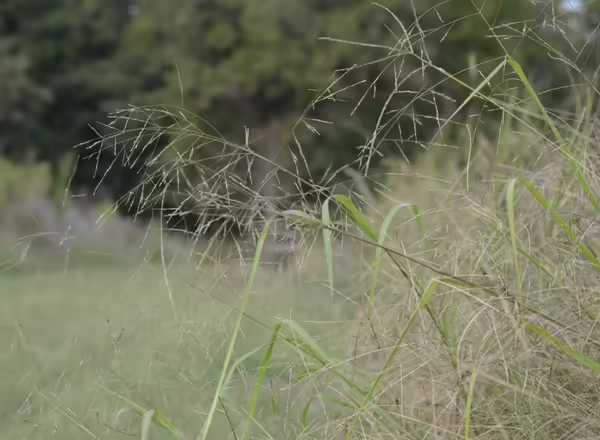
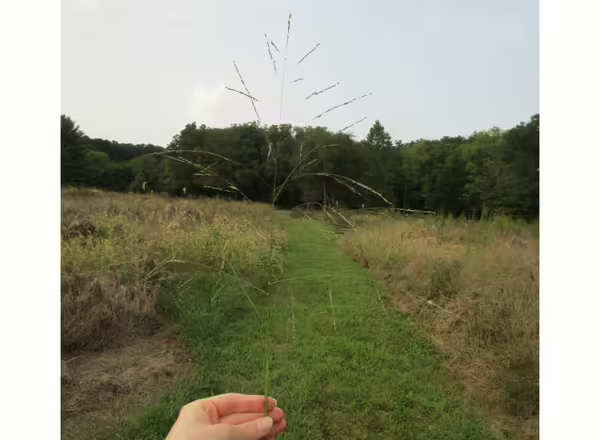
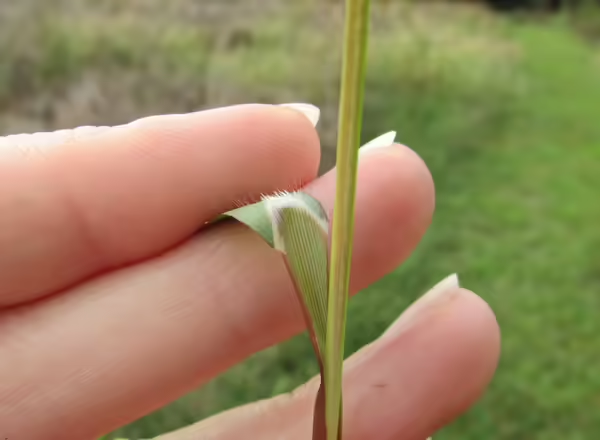
Fall panicum – Panicum dichotomiflorum
The last one we’ll compare today is Fall panicum, which just like witchgrass is a native summer annual found in similar habitats. This one grows a bit taller, up to 4 feet. It has broad spreading leaves that can be hairy or smooth, hairless leaf sheaths, and a ligule of white hairs at their base. When it blooms it has an airy, open panicle. Most easily confused with Switchgrass, the spikelets are smaller and you won’t find the triangle shape of hairs at the base of the leaf blades.
Have you seen these grasses before?
Thank you for reading! Need a refresher on grass identification terms, like ligule and spikelet? Check out this blog post!
About Grasses at a Glance
Never miss a new post! Subscribe to our email list to get updates each time a new post is available.
Give us feedback! How helpful was this information (click one): Very helpful | Somewhat helpful | Not very helpful
ABOUT THE AUTHOR: Erin Garrett is a Natural Resources, Environment, and Energy Educator for University of Illinois Extension serving Alexander, Johnson, Massac, Pulaski, and Union counties. Erin develops and delivers high impact programming to adults and youth to help them develop an appreciation for natural resources and to empower them to make small changes to positively impact the environment. Erin’s programming focuses on why homeowners should consider choosing native plants, how to support native pollinators, how to identify grasses, how to identify and manage invasive species, and developing an appreciation for prairie ecosystems.