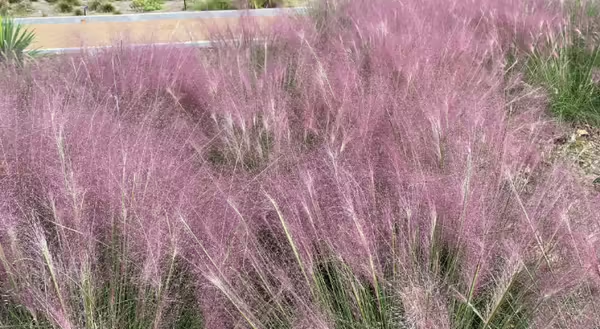
When thinking about adding a pop of color to your garden, grasses probably aren’t at the top of your list. But think again! Pink Muhly, Muhlenbergia capillaris, is a contender.
The first time I saw Pink Muhly was at the Missouri Botanical Garden. Being a grass nerd, I of course had to go see what the beautiful wispy mass of pink was. I was pleasantly surprised to learn that Pink Muhly is native to the southeastern U.S., including some southern Illinois counties.
The next time I saw it was for sale at a garden center. It is always a treat when I find a native plant widely available, and a grass no less!
What makes pink muhly so great?
Pink Muhly is a perennial, warm-season grass. This means it will put on much of its growth in summer and flower in late summer to early fall.
- It is a bunchgrass, which I love for a grass in the home garden.
- They are easy to maintain and don't spread from rhizomes.
- A simple chop of the previous year's growth in early spring, its annual haircut, keeps bunchgrasses looking nice.
Once established, Pink Muhly is drought-tolerant. It also does well in poorer soil conditions, so if you have a sandy or acidic spot in your garden, this is a good option.
Finally, you can't beat the fall color! The large, pink, wispy seed heads are stunning, especially when planted in large groupings.
I would use this grass as a border or plant it in clumps of 3-5 individual plants in one area for a nice mass effect.
Pink Muhly is on my "to be planted" list of plants for my home landscape — will you add it to yours?
Thank you for reading! Interested in other grasses I'd recommend for the home garden? Check out my blog post from earlier this year on popular native grasses for the home landscape.
About Grasses at a Glance
Never miss a new post! Subscribe to our email list to get updates each time a new post is available.
Give us feedback! How helpful was this information (click one): Very helpful | Somewhat helpful | Not very helpful
ABOUT THE AUTHOR: Erin Garrett is a Natural Resources, Environment, and Energy Educator for University of Illinois Extension serving Alexander, Johnson, Massac, Pulaski, and Union counties. Erin develops and delivers high impact programming to adults and youth to help them develop an appreciation for natural resources and to empower them to make small changes to positively impact the environment. Erin’s programming focuses on why homeowners should consider choosing native plants, how to support native pollinators, how to identify grasses, how to identify and manage invasive species, and developing an appreciation for prairie ecosystems.