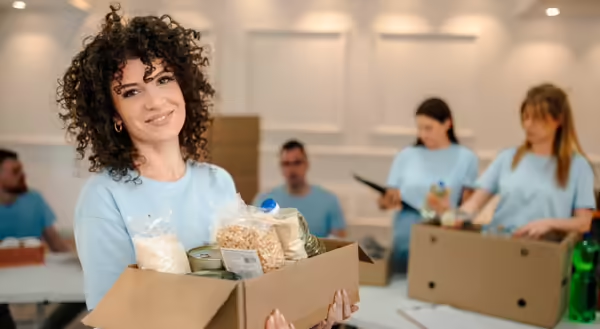
I was once told a story about a community that did a large community food drive every year. The agency that organized the event incentivized businesses and other organizations to participate through a cash donation to a nonprofit of the winner’s choice. The company that won was the one who collected the heaviest weight against all the other participants. This sounds like a great idea, right? Everyone gets to feel good because they all contributed to something greater that helps people less fortunate than they are. Except, the company that won had researched what the heaviest item would be and asked all their employees to only buy that one item. Can you guess what the heaviest food product is? It was cases of water. This organization showed up with an entire box truck full of bottled water. They won the contest, their nonprofit received the cash prize, and this community gave their food pantries ridiculous amounts of water to be distributed to their guests.
In a time when everyone is obsessed with eating enough protein (although most of us are already getting enough without all the new foods with protein added to them), food pantries struggle to supply their guests with any protein foods. Many food banks (the organizations that provide food to local food pantries) had created supply chains for meat directly from local farmers during and after COVID-19, but those relationships have dwindled since the pandemic and now food banks are having a hard time getting meat or other protein items due to their cost. This issue then leads to health concerns for the families that are using the food pantry as their main source of food. If a person does not consume enough protein, the lack of nutrients a person gets from protein foods, like iron, can affect mood, cognition, and energy levels making it even harder to maintain a household and keep a job.
While the idea of incentivizing food drives comes from a good place, maybe it’s time to move away from incentivizing weight or highest number of items and maybe we should start incentivizing the quality of food. Hopefully, we’ll see excitement for classrooms to compete for the food drive trophy by bringing in the largest number of shelf-stable protein foods!
About the Author
Staci Coussens is a Community and Economic Development Educator with University of Illinois Extension, serving Livingston, McLean, and Woodford Counties. Coussens works in the community helping to make the healthy choice the easy choice for our most vulnerable populations in Livingston, McLean, and Woodford Counties and beyond.