This blog post is written by Miya Clay, Illinois State University dietetic intern. With winter approaching, we start to see a lot less sun. Additionally, the sun we do see is much less intense than the summer sun, which affects how our bodies produce vitamin D!
Vitamin D helps our body absorb calcium and phosphorus, two minerals that are essential to our bone health. Vitamin D also has potential protection against chronic diseases like cancer and heart disease, and can help with maintaining a healthy immune system, which is especially important going into winter.
Sunlight is an important source of vitamin D for most people. From May to September, spending time outdoors during the afternoon can help our bodies produce vitamin D, but deficiency remains a concern year-round, even at the sunniest times of the year. Additionally, the amount produced varies based on many factors such as age, skin tone, and the intensity of the sunlight. During winter in Illinois, sunlight is generally not strong enough for sufficient vitamin D production for anyone. We are just too far north!
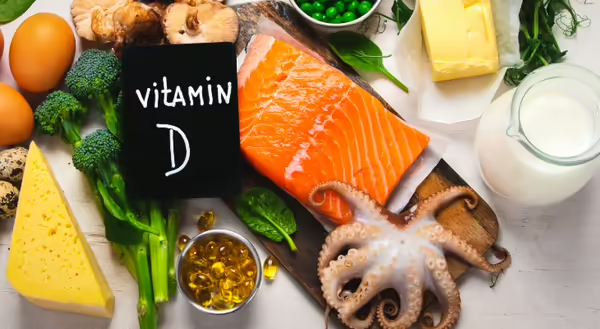
Fortunately, though, we can get creative with adding foods rich in vitamin D into our diet. Foods containing natural vitamin D are somewhat rare, so many food products are fortified with vitamin D. Here are some foods to look for to increase your vitamin D intake:
Naturally-occurring sources of vitamin D:
Salmon
Rainbow trout
Canned light tuna
Sardines
Tilapia
Egg yolks
Liver
Mushrooms with UV-exposure
Vitamin D fortified foods:
Breakfast cereals
Milk and plant-based milk alternatives
Orange Juice
Margarines
Yogurt
Nutrition Tip: Always check the label! Not all brands or products are fortified with the same amount of vitamin D, and some may not be fortified at all. Check the nutrition facts label to see how much vitamin D your favorite foods provide.
What about supplements? If you are concerned about a deficiency or interested in starting a vitamin D supplement, speak with your healthcare provider. They can determine if supplementation is appropriate for you.
Not sure how to incorporate some of these foods into your diet? Here is a simple and nutritious recipe inspired by Spicy Tuna Rolls to incorporate vitamin D into your lunch or dinner menu!
Resources:
Bilezikian, J. (2022, August 24). What’s the deal with vitamin D? Columbia University Irving Medical Center. https://www.cuimc.columbia.edu/news/whats-deal-vitamin-d
Harvard T.H. Chan School of Public Health. (2023, March). Vitamin D. The Nutrition Source. https://nutritionsource.hsph.harvard.edu/vitamin-d/
About the Author
Jenna Smith is a Nutrition and Wellness Educator with University of Illinois Extension, serving Livingston, McLean, and Woodford Counties. Smith uses her experience as a registered dietitian nutritionist to deliver impactful information and cutting-edge programs to Livingston, McLean, and Woodford Counties and beyond.