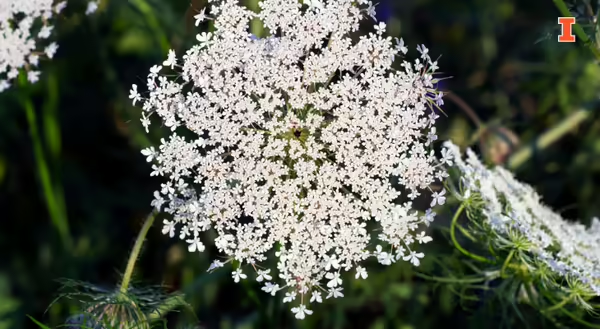
Every family is full of characters—the fun one, the pretty one, the difficult one, etc. The Umbellifer family has that, too. While carrots are the life of the party—sweet, crunchy, and great with ranch, other members like poison hemlock are better appreciated from a distance.
Who are the Apiaceae?
Members of the Umbellifer, or Apiaceae (A-pea-ACE-ee-uh) family, have large, umbrella-shaped (or “umbel”) flower clusters. The leaves are frequently fragrant when crushed, and often somewhat (or very) lacy in appearance. But the umbrella-shaped flower is what really sets this family apart. In addition to carrots, members include such culinary staples as celery, parsnip, dill, cumin, and parsley. It also includes poisonous members like giant hogweed, poison hemlock, and cow parsnip.
Queen Anne’s Lace vs. Poison Hemlock
Queen Anne’s Lace (Daucus carota) is a common weed often seen on roadsides and other wild spaces. Also called “wild carrot”, it has a dense, flat-topped white flower cluster that sometimes (but not always!) has a small reddish flower in the center. The stem is also solid green and hairy.
In contrast, poison hemlock has a flower cluster that is less dense—to me, it looks more like a loose group of smaller clusters, as opposed to one big cluster. This umbel is also more rounded. One of the most striking differences is the red splotches on the stem.
Other notable family members
Cow parsnip closely resembles hemlock but has yellow flowers. Yarrow is a common ornamental plant that occasionally escapes into the landscape. It’s much shorter the rest and has very fine, lacy leaves. Giant hogweed, by comparison, is considered invasive and can grow up to 15’ tall. (While giant hogweed is known in Illinois, there are very few populations and those are being managed.)
Cautions
Some members of this family, like cow parsnip and hogweed, contain compounds that are phytotoxic. This means that if you touch this plant and are then exposed to sunlight, it can cause a chemical burn. Care should be taken when removing these plants from your yard or restoration sites. Always wear gloves and long sleeves. Allergies to these plants also exist, so while some people can touch wild carrot or poison hemlock with no ill effects, others may develop contact dermatitis.
Some members of this family are also poisonous. Poison hemlock, for example, has been the cause of many poisonings when foragers mistake it for wild carrot or parsley. Never consume a plant unless it has been positively identified with several field marks. Apps and other AI tools should never be trusted to give accurate information about the identification and edibility of wild plants.
For more information on the carrot family, check out this blog post. Also, check out the University of Illinois Extension Horticulture YouTube Channel for videos on tree care and other horticulture topics.