
Freeport High School High Tunnel Research, July 2026
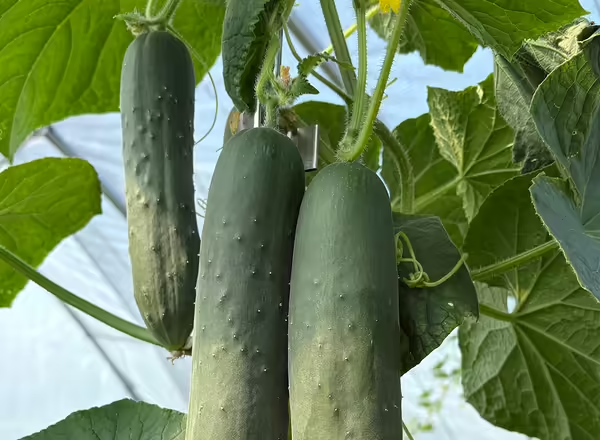
The cucumber and tomato high tunnel research project at the Freeport High School Student Garden continues to highlight both the benefits and challenges of protected vegetable production in Northern Illinois. Cucumbers have performed exceptionally well this season, with plants reaching the top wire by early July and showing strong vigor and yields throughout the month. Students removed several plants infested with spider mites and pruned lower leaves to improve airflow, helping maintain overall plant health. While cucumbers remain productive, recent scouting identified low levels of cucumber beetles are present though not as destructive as they could be. Minor issues with fruit shape have also been observed on 'Marketmore'.
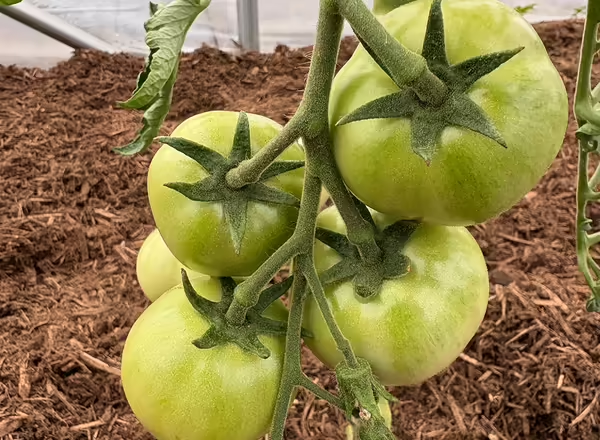
Tomatoes have faced greater challenges in the high tunnel this season. Plants have shown persistent stress throughout July, with irrigation and heat management remaining concerns. Disease pressure continues to be most evident on 'Amish Paste', flowering has been delayed in some plantings due to excessive heath, and overall plant growth remains somewhat stunted despite good trellising, heavy fruits, and ventilation practices. Observations from late July suggest that additional shade management may be needed to reduce heat stress and improve plant performance. As a reminder, this study is growing cultivars that are not strictly high tunnel ones, hence some challenges in adaptation.
Compared to this time last year, cucumber growth remains one of the strongest aspects of the project. In August 2025, cucumbers had overcome a late planting date and were producing heavily, with some plants reaching 8 to 10 feet tall and student harvests approaching 70 pounds in a single picking. Tomatoes, however, continue to show a similar response to excessive summer heat, reinforcing the importance of shade cloth and environmental management strategies for high tunnel tomato production in northern Illinois.
This season's observations continue to provide valuable learning and research opportunities for FHS students while generating practical insights for high tunnel vegetable growers across the region.
Apple Season
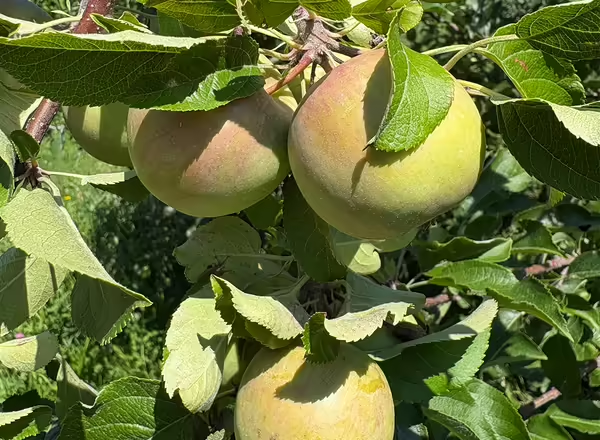
Most northern Illinois orchards will begin opening toward the end of August, with early-season varieties such as 'Zestar!®' leading the 2026 harvest. Developed by the University of Minnesota, 'Zestar!' has become one of the most common apples to kick off the fall season in Northern Illinois. The fruit is known for its crisp texture, sweet-tart flavor, and relatively good storage life for an early apple. While well-adapted to our region, growers should be aware that the variety can be susceptible to apple scab. Following 'Zestar!', additional early-season varieties such as 'Early Honeycrisp' and others will begin ripening at the start of September.
For orchards carrying a crop this year, the season has brought its share of challenges. Growers have navigated significant swings in temperature, rainfall events, and other weather-related surprises. Even in orchards with strong crop loads, frost rings and other fruit quality issues associated with spring weather events have been observed this last month. During orchard visits across northern Illinois, crop loads continued to vary not only among orchards but also among varieties within the same blocks.
One lesson from this season is the limitation of the temperature thresholds commonly used to predict freeze and frost injury. Many of these thresholds were developed using cultivars such as 'Golden Delicious' and other older varieties. Today's orchards often contain a diverse mix of legacy cultivars, newer MAIA and PRI selections, Minnesota and Cornell releases, and heirloom varieties, all of which can respond differently to spring freeze events. As a result, the traditional threshold temperatures do not always tell the full story, and the true impact on fruit set and quality has not become apparent until July. An orchard may appear to have a strong overall crop, but certain varieties, such as the increasingly popular and important 'Evercrisp', may still have experienced substantial losses.