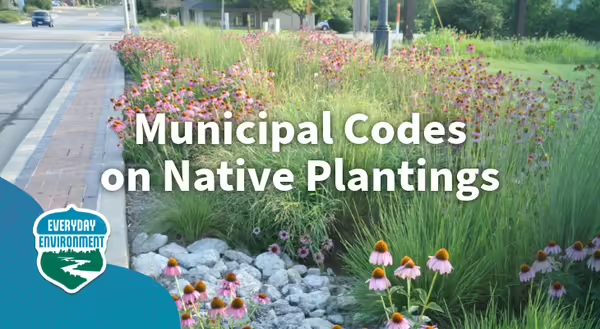
Gardening with native plants has gained substantial popularity in the last decade, but attitudes favoring — and landscaping ordinances enforcing — pesticide-heavy lawns and invasive-laden gardens remain.
For a home gardener interested in installing a native garden, these are major hurdles to growing the ecologically friendly garden of your dreams. This blog will explain some basics and provide suggestions about how to move forward.
Note: This blog is not legal advice.
Review Your Local Landscaping Ordinances
Before you do anything, preferably before you even start planning your native garden, read and understand your city’s landscaping code. This means you need to review your city’s code of ordinances, which will be available online through the city.
Do not skip this step. It may take a lot of effort to find the relevant sections and interpret exactly what they mean, but you need to know everything from what the city considers to be a “weed” to what height vegetation can be in every part of your yard.
You’re very likely to find that your city’s code effectively precludes the planting of most herbaceous native plants due to height restrictions. These plants average taller than the non-natives common in the horticultural trade.
You might even find that your code effectively mandates a turf-only lawn; I know of an ordinance that outlaws the growing of “weeds,” which it defines as any herbaceous plant taller than 6 inches. Curiously, if you were to visit this town on Google Street View, you’d find many residents with lush gardens much taller than the supposed limit.
Where to find your city's municipal code:
- Your city, town, or village website.
- Check if it's on Municode or the American Legal Publishing Code Library.
- Search "city name's municipal code" in your favorite internet search website.
About Ordinance Enforcement
Many landscaping ordinances are so restrictive that, if they were truly enforced to the letter of the law, whole blocks and neighborhoods of the city would be found non-compliant. The reason these residents do not have piles of tickets on their doors is that ordinances are nearly always enforced through complaints.
Few cities have the resources to patrol their streets, and fewer still would want the kind of conflict that would bring with their residents. I’ve talked with several city planners about their restrictive landscaping codes and why they don’t change them to provide more allowances for pollinator-friendly plants. A common theme in their answers is often that the city needs a very clear and unambiguous way to both resolve conflicts about landscaping between residents and, more importantly, ensure that landowners of rental properties and vacant lots do not abandon property maintenance.
Mitigating Risk
The ultimate way to avoid getting a ticket for your native garden is to work with your neighbors and your city council to have the ordinance changed. Many neighborhoods have done so successfully, and the movement towards more flexible ordinances has even spread to the state level.
Barring an ordinance change, your next best steps are the following:
- Talk with your neighbors about your plans for your native garden. Show them what it might look like when it is done, how it might look a little strange in the first year (native plants often take a year or so to get well-established), and explain to them why you’re choosing native plants over non-natives. A good relationship with your neighbor can go a long way. If they’re skeptical, be a little more careful than you might otherwise be.
- Lay out your garden in the traditional European style, with single-species plant groupings, clean separation between plants, and crisp borders between lawn and garden.
- Comply, or overcomply, with safety ordinances. Never plant in sight triangles or let plants get close enough to the sidewalk or street that they might block the path.
- Consider slowly converting your current garden to natives instead of all at once, and use plugs or, preferably, relatively mature potted plants.
- Know your garden. Know every plant you put in the ground by name, keep your receipts from purchases, and keep a detailed planting plan. This information can come in handy when showing code enforcement that your garden is intentional and well-maintained, just like everyone else’s garden.
- Avoid aggressive plants that might get out of your control, as well as plants that someone might consider to be a “weed” at a quick glance. For example, common milkweed, which both spreads aggressively and is often seen on roadsides.
- Stay away from the parkway. The area between the road and sidewalk is maintained by you, but belongs to the city and is often very strictly regulated. Of the people I have talked to about ordinance violations with native plants, this is the location that is most often the cause.
- Only plant short plants. This might really limit your species selection, but there are a few very short natives.
Conclusion
Don’t take this blog as an endorsement of the idea that you should violate your municipal code.
Running afoul of your city’s code is a bad idea, particularly codes that touch on safety, like keeping vegetation out of sight triangles, off of sidewalks, and away from rights-of-way. Some ordinances simply will not allow you to maintain your yard the way you want to, and you’ll either need to find a way to comply or otherwise organize within your community for a change.
More Resources
Brodie will release more detailed information related to residential landscaping code and native plants on the Illinois Wildside blog he runs with Dr. Joy O’Keefe. You can subscribe and read more by visiting the Illinois Wildside webpage.
Photo by Eliana Brown, Extension Water Quality and Stormwater Specialist.
About Everyday Environment
Everyday Environment is a series of blogs, podcasts, webinars, and videos exploring the intricate web of connections that tie us to the natural world.
Was there something about this blog's topic we didn’t cover? See something cool in nature? Let us know! Hit "Connect with Us" below to send us your question or share your everyday nature observation, and we may share it in a future blog or podcast.
Subscribe to the Newsletter Connect with Us Find Your Local Extension Office