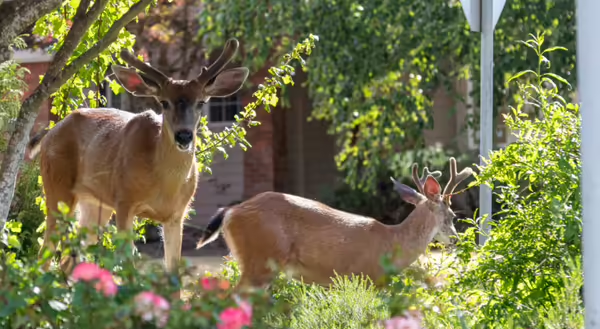
If you are like me, you may enjoy watching deer browse in the forest. They are fascinating to observe and among the largest wild animals in Illinois. My interest in watching deer waned one morning last week when, upon opening the drapes to the backyard, I found myself nose-to-nose with a doe browsing the hostas near the air conditioner. Our surprised staring contest broke when my yellow lab, Sophie, sounded the alarm. Too late, dog, but thanks for trying.
Deer in our area face little predation and thrive in human-dominated landscapes, leading to frequent encounters with people. Gardeners know the battle all too well. Deer are large, and nearly every plant within reach is fair game for these stomachs with legs.
Deer, of course, have their preferred foods, but during lean times even “deer-proof” plants may end up on their salad bar.
It is relatively easy to identify deer browsing. Because their lower incisors are dull and they lack upper incisors, deer bite and tear plant material. Deer browsing leaves a ragged, shredded appearance on the targeted plant. Rabbits, on the other hand, have very sharp incisors and clip vegetation cleanly at a 45° angle. Deer can also browse much higher on plants than rabbits. During winter, when food is scarce, deer may strip the bark from trees and shrubs.
The best defense for deer is all about de-fence (No regrets about that pun)
Research shows that exclusion is the best way to control deer damage in most situations. Investing in exclusionary fencing is essential for the dedicated gardener or commercial grower.
Deer are excellent jumpers, so fences need to be at least eight feet high. If you prefer not to erect a fortress around your garden, electric fences can be used instead of tall fencing. Electric fences are often cheaper and still effective at deterring deer from entering an area. For guidance on fence designs, contact your local IDNR biologist.
Other deer prevention tips:
The best deer prevention uses multiple techniques. In addition to exclusionary fences, the following tips may help control deer damage:
- For those with electric fencing, disconnect power to the fence and wrap a piece of aluminum foil on the wire. Spoon a little peanut butter on the foil and turn the fence back on. Deer will be lured to the peanut butter only to be met with a shock. The mild shock deer receive teaches them to avoid your garden.
- Wireless deer fences work similarly. A wireless deer fence is typically a battery-powered stake pushed into the ground. The top of the stake has bare electrode wires with an attractant that lures the deer to sniff the electrodes. A touch of the nose to the electrodes creates a startling shock. These products are relatively new to the market, and research evaluating their effectiveness is limited.
- Install motion-activated sprinklers. Motion-activated sprinklers are triggered when something trips the motion sensor. Point the sprinkler at the area you want to keep protected, and when a deer, squirrel, or forgetful gardener walks through the beam, they get sprayed with a few cups of water.
- Deer acclimate to scare tactics like scarecrows, reflective materials, and flags. Move these items every few days to prolong their effectiveness.
- Repellents temporarily reduce damage, and many aren’t labeled for use on food crops. University studies have consistently found repellents containing putrescent egg solids (rotten eggs) or blood-based ingredients among the most effective options.
- Home remedies like human hair, blood meal, and bone meal all weather away very quickly. Hanging bars of soap has a limited effective radius for protection, but results are inconsistent. In areas where deer have acclimated to people and our scents, these deterrents generally do not work.
Good Growing Tip of the Week: Select plants that are not palatable to deer. Yes, there are plants that deer will avoid most of the time. Contact your local Extension office for a list of plants less susceptible to deer browsing. If winters are harsh or deer populations are high, they will eat just about anything.
Thank you for reading!
Sign up for our emails! Want to get notified when new Good Growing posts are available? SIGN ME UP
Give us feedback! How helpful was this information (click one): Very helpful | Somewhat helpful | Not very helpful
MEET THE AUTHOR
Chris Enroth is a horticulture educator with University of Illinois Extension, serving Henderson, McDonough, Knox, and Warren counties since 2012. Chris provides horticulture programming with an emphasis on the home gardener, landscape maintenance personnel, and commercial landscapers. Additional responsibilities include coordinating local county Master Gardener and Master Naturalist volunteers - providing their training, continuing education, advanced training, seasonal events, and organizing community outreach programs for horticulture and conservation assistance/education. In his spare time, Chris enjoys the outdoors, lounging in the garden among the flowers (weeds to most).