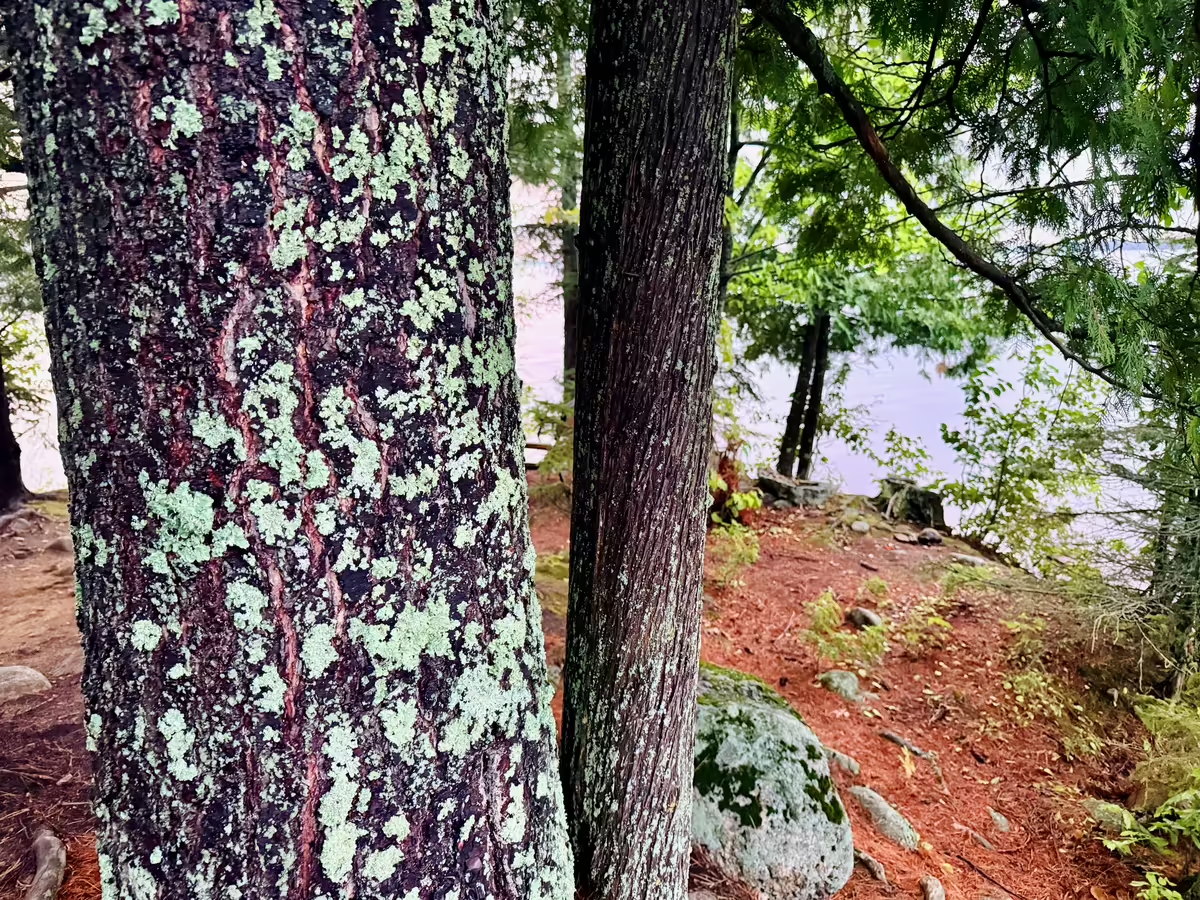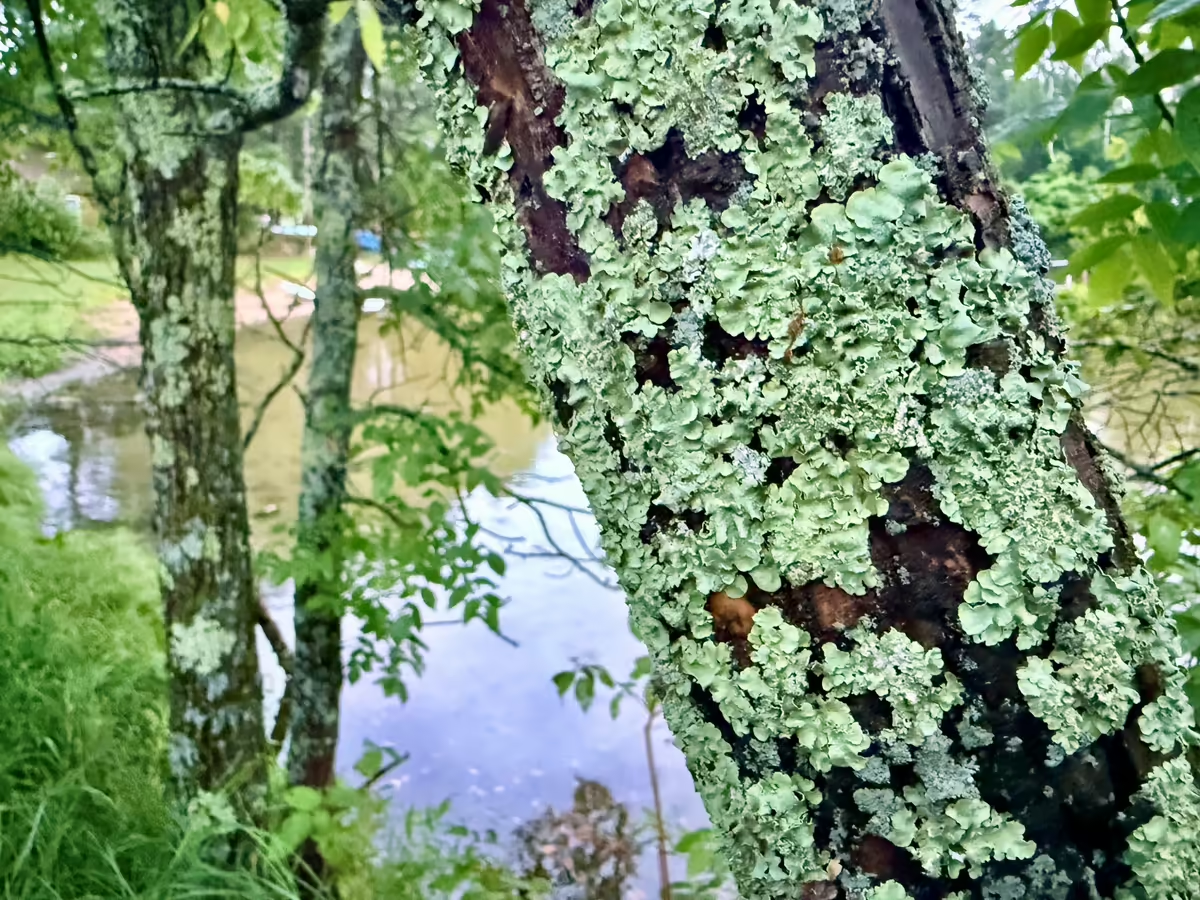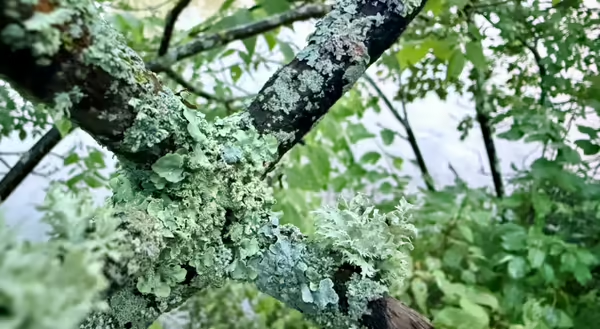
Earlier this year, I received a question from a community member who stopped into the office, concerned about things growing on their tree that had spread to their deck. After sharing a few photos, I was able to identify the “plant” in question as none other than the non-plant organism lichen. Ever since, I’ve been wanting to write about this incredibly unique landscape feature because I believe this community of readers will appreciate the remarkable living partnership nature formed to create lichen.
What is lichen?
Lichen blurs the line between being an individual organism and a living ecosystem because they are a composite. Lichen consists of a fungus living in close association with a photosynthetic partner of a green algae, a cyanobacterium, or sometimes both. The fungus provides structure, protection, and access to water and minerals, while the photosynthetic partner produces carbohydrates that feed the organism. Together, a new organism-like structure is formed that is capable of surviving conditions that would be challenging to survive independently.
Although lichen may resemble plants, they are distinctly not plants. One of the most common misidentifications is that lichen is a type of moss. This is understandable, as lichen and moss are similar in size and often inhabit similar or the same habitat. Moss has structures that look and function like the leaves, shoots, and roots of plants. The symbiotic relationship of fungus and algae enables lichen to have structure and anchor to a location via the fungus, while the algae or cyanobacteria create food.
Where are lichen found?
Lichen occurs in nearly every terrestrial ecosystem, from alpine tundra and mountaintops to hot deserts, from rocky shorelines to temperate forests. In North America alone, more than 3,600 species have been identified, and researchers continue to discover new species each year. Lichen grows on many surfaces including buildings, trees, rocks, and more. They are generally not harmful when growing on trees and shrubs but may, over time, cause damage to man-made structures.
While true, the symbiotic relationship that produces lichen enables the fungus and algae species to live in a multitude of environments; very few species of lichen are able to tolerate air pollution. Lichen absorb much of their water and nutrients directly from the atmosphere and are not able to filter out toxins. As a result, many species are highly sensitive to poor air quality and pollutants. A decline in abundance or health of lichen can be an early warning sign of environmental degradation. The abundance of lichen and their sensitivity to poor air quality has led to the creation of the U.S. Forest Service’s National Lichen and Air Quality Database, a biomonitoring effort that helps federal agencies track air quality impacts and changes across the country. Early detection can result in faster response from managing agencies.
Ecological importance
In addition to being an indicator of air quality, lichens play several important ecological roles. Many species are considered “pioneer organisms” because they colonize bare rock and other harsh surfaces before most plants can establish. Some lichens produce acids that slowly weather rock, contributing to soil formation over time. Others help cycle nutrients through ecosystems, including nitrogen-fixing species that enrich nutrient-poor environments.
Lichens also provide food, shelter, and nesting material for wildlife. Deer, rodents, and numerous invertebrates consume lichens, while birds use them in nest construction. In some ecosystems, lichens function as keystone species whose presence supports broader ecological communities. Their contribution to habitat quality makes them an important component of healthy forests and natural areas.
In the landscape
For the homeowner or landscape manager, lichen should be observed as a sign of good air quality and a healthy ecosystem, not a problem that needs to be managed. Homeowners can appreciate the symbiotic relationship between two different species that come together to form a new one and the ecological benefits it brings. If lichen is growing on man-made structures where it is undesirable, removal can be done effectively with little chance of this slow-growing species reemerging on the site. Understanding what is in our landscape leads to more informed management decisions and a greater appreciation for nature.
Good Growing Fact of the Week: Most lichen species are relatively slow-growing, as little as 2/100 inch per year. However, some outliers exhibit impressive growth rates of up to 1.5 feet per year.
Thank You for Reading!
Sign up for our emails! Want to get notified when new Good Growing posts are available? SIGN ME UP
Give us feedback! How helpful was this information (click one): Very helpful | Somewhat helpful | Not very helpful
Meet the Author
Emily Swihart is a horticulture educator with the University of Illinois Extension, serving Henry, Mercer, Rock Island, and Stark counties since 2021. Emily provides horticulture programming with an emphasis on the home gardener, the urban forest, native plant ecosystems, and landscape design. Additional responsibilities include supporting local county Master Gardener and Master Naturalist volunteers - providing training, continuing education, advanced training, and their involvement in seasonal events and community outreach programs.