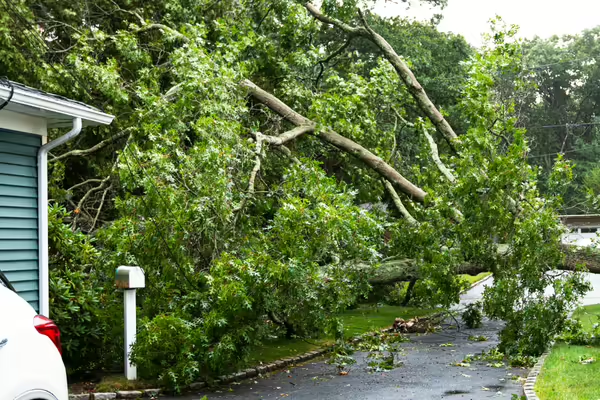
URBANA, Ill. — After strong storms swept across much of Illinois, many communities are facing damaged property and stressful situations. The hours and days following a major storm are often filled with urgent questions. Residents can navigate those decisions using research-based resources from University of Illinois Extension to guide safe cleanup and recovery.
“After any sort of disaster, it’s natural to have questions and fears,” said Illinois Extension Educator Nancy Kuhajda, who currently serves on an internal Extension working group focused on disaster response. “Our primary goal is to provide research-based information about this disaster to our community so people can make informed decisions about recovery and prepare themselves for future storms.”
The most important thing, either in recovery efforts or when being proactive for the future, is to focus on things you can control,” said Kuhajda, who recommends putting together a disaster response kit before a storm.
“After the storm, it's a bit trickier; you need to prioritize your safety first and foremost. Once you are safe, make good choices. For example, many people think they can remove fallen tree limbs on their own. However, downed branches are often larger than they appear and can pose a life-threatening risk when on or near power lines. When power lines are not in play, you still need appropriate tools and the knowledge to use those tools safely, and you may need to hire a tree care professional to assess or handle the damage. If you’ve never used a chainsaw, you probably shouldn’t learn in a disaster situation or on a large tree limb in your backyard.”
Providing timely, research-based information is a core part of Illinois Extension’s mission, which operates within the University of Illinois land-grant system. Kuhajda says a host of Extension resources are available to help residents access practical guidance on topics such as safe storm cleanup, food safety after power outages, tree damage assessment, and steps families can take to prepare for future severe weather.
Severe Weather Disaster Resources
Agency contacts
What to do before, during, or after a:
Flooding
Food and kitchen safety
- Boil orders
- Build an emergency food supply
- Food safety during floods
- Power outage meal prep and food temperatures
- Printable PDF Resources (English and en Español)
Power outages and electricity
Stress
Kids and families
- Learn more about weather (En Español)
- Helping kids and teens cope with stress
- Communicating with children during stressful times
- Terrific Teachable Moments app: Reinforce positive behaviors through mini-lessons on social and emotional learning.
- Helping children cope with disasters
Resources for leaders and first responders
- Community resources
- Staying safe around powerlines for first responders
- Electricity Has “Potential” For Serious Injury To Emergency Responders
General household resources
- Building a family disaster supply kit
- Preparing trees for severe weather
- Hiring a tree care professional
- Powerline safety (YouTube playlist)
Prepare for the future
For residents looking to the future, preparation is important.
“Disasters are not an ‘if they will happen’ proposition,” said Russell Medley, Illinois Extension community and economic development educator. “The need is real, and disasters of any kind can happen anytime. By preparing upfront, individuals, families, organizations, and businesses can ensure the safety of their members or employees, reduce fear and anxiety, minimize the impacts, and make recovery easier.”
Medley says that preparing is easier than many people think and boils down to “knowing the potential disasters that might affect you, knowing the community warning systems, signing up for alerts, and making a plan.”
Kuhajda echoes the sentiments, adding, “While this may seem strange to mention during disaster recovery, it is always easier when we prepare ahead of time. And while the best time to prepare for the future was yesterday, the right time is now.”
Extension is a community partner… get in touch
Knowing where to turn in times of turmoil is important. According to Kuhajda, Illinois Extension is one resource that residents can turn to when they are unsure.
“Illinois Extension provides trusted, research-based resources and answers questions to help point you in the right direction. That’s our mission. We serve all 102 counties in Illinois. If you have a question and are unsure of where to turn, reach out to your local Extension office."
Find your local Illinois Extension office at: go.illinois.edu/ExtensionOffice.
SOURCES: Nancy Kuhadja, Horticulture Educator, Illinois Extension; Russell Medley, Community and Economic Development Educator, Illinois Extension
WRITER: Anthony Warmack, Communications and Marketing Program Coordinator, Illinois Extension
INTERVIEWS: Contact Anthony Warmack, warmacka@illinois.edu, to request specialist interviews on this topic
University of Illinois Extension develops educational programs, extends knowledge, and builds partnerships to support people, communities, and their environments as part of the state's land-grant institution. Extension serves as the leading public outreach effort for University of Illinois Urbana-Champaign and the College of Agricultural, Consumer and Environmental Sciences in all 102 Illinois counties through a network of 27 multi-county units and over 500 staff statewide. Extension’s mission is responsive to eight strategic priorities — community, economy, environment, food and agriculture, health, partnerships, technology and discovery, and workforce excellence — that are served through five program areas — 4-H youth development, agriculture and agribusiness, community and economic development, health and community wellness, and natural resources, environment, and energy.