Here are a few strategies that are easily deployed to lower stress at weaning time.
Use good stockmanship when handling cattle. Understand cattle behavior. Work with the cattle’s natural behavior, not against them. Use low-stress handling practices, improved facility designs and be patient when processing calves.
Pre-wean castrate and vaccinate- castration and vaccination BEFORE weaning is a good practice. Castration at birth may be an option if bull calves aren’t retained but can decrease weaning weights. Pre-wean vaccinate and castrate can occur around 60 days post calving when a calf implant can be used on culls. Letting calves handle these stressors while still having their mother at their side will lessen the stress significantly.
Creep feeding- Economics vary from year to year, but creep feeding for two to three weeks prior to weaning helps familiarize cattle with feed and prepare the rumen for post-milk diets. Use a similar diet/feedstuffs for creep and post-weaning rations. Adequate feed intake is the foundation to healthy calves as proper nutrition will support immune system responses.
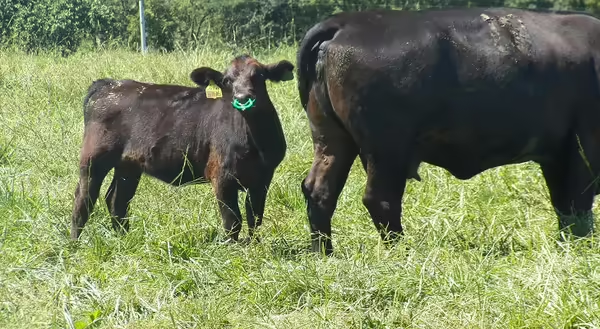
Fence-line weaning- research has shown fence-line weaned calves eat more, rest more, and vocalize less than calves separated and weaned in a drylot. The familiarity with the environment (pasture), the feed (grass and creep), and the sight of their mother all help reduce the stressors on the calf. Fences need to be equipped to keep the separation.
New technologies- several new innovations are helping reduce stress at weaning. Maternal Bovine Appeasing Substance (MBAS) is a relatively new tool to use to aid in mitigating the effects of stress, especially weaning stress. Another product “Lidoband” is a castration band containing lidocaine as a local anesthetic for pain control.
Avoid dusty or muddy pens as location for weaning. Dust can be a large irritant to eyes and lungs which could result in more pinkeye and respiratory issues. Mud can increase maintenance requirements, decrease performance, and increase bacterial load.
Ensure that the water is familiar and placed in the travel of the calf. Water is the most important nutrient. Fresh, cool water that is in a familiar waterer will help calves stay healthy and on feed.
Feed a nutrient dense diet. Intake will be lower than normal at weaning. Avoid any filler feeds at weaning that lower nutrient density or could be sorted by more aggressive animals skewing the diet for more timid calves.
Avoid drastic changes in diets. If calves have only consumed pasture and milk, a heavy concentration of grains is not best. The ruminant stomach is sensitive to pH changes that occur in rapid, extreme shifts from grass (fiber) to grains (starch). Using fiber-based co-product feeds and a balancing mineral supplement are better in this scenario.