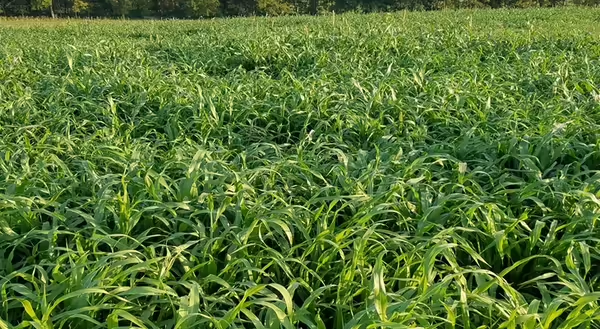
Fall brings on the first frost. This can cause need for management and precautions when grazing certain forages.
Sudangrass, sorghum-sudangrass hybrids, and sorghums contain a compound called dhurrin. When the plant tissue is frozen, enzymes in the plant convert dhurrin into hydrocyanic acid or hydrogen cyanide, also referred to as prussic acid. Prussic acid poisoning can be rapid and lethal. Ruminants can show symptoms such as excessive salivation, rapid breathing and muscle spasms within 15 minutes to an hour after consuming toxic forages. The prussic acid potential is higher during early plant growth. Sudangrass and sorghum-sudangrass hybrids require 28 degrees for a killing frost, but even a light frost requires special management.
Sudangrass, sorghum-sudangrass hybrids, and sorghums can be safely harvested or grazed after a frost if the crop was safe to harvest before the frost and the plant tissue is allowed to dry.
Avoid grazing young re-growth, new tillers are the most dangerous. These forages should be at least 18 to 24 inches tall before harvesting.
If at the proper height, frosted sudans and sorghums can be fed after the plant tissue has dried. Drying allows the prussic acid to dissipate from the plant material. With a light frost, only the tops of the plants may be damaged, and one should delay harvesting or grazing 4 to 5 days. With a killing frost (28 degrees or colder), one should wait for adequate dry down, generally 1 to 2 weeks.
A safer way to utilize frosted material of questionable prussic acid content is to ensile it. Prussic acid content is reduced substantially by enzymes and fermentation (typically requiring at least 4 weeks). A second method is to make the crop into hay if dry-down conditions permit. Grazing is the least desirable method and supplementing with other feedstuffs while grazing to dilute the diet is recommended.
Dhurrin-free varieties are becoming available in the marketplace. Talking with your local seed supplier about the opportunity to utilize a dhurrin-free variety of sorghum or sorghum-sudangrass could be a way to mitigate the risk of prussic acid poisoning in the future.
Pearl Millet may be another option to mitigate risk. Pearl millet is a summer-annual grass like the sorghum family but does not produce toxic levels of prussic acid. Nitrate risk, especially during drought or stress can still be a risk with pearl millet and often is a slightly lower yield than the sorghums.
Overall, summer annual forages can be a great solution to the summer slump that cool season pastures pose. However, many need to be actively managed in the fall when risk of frost and freezing temperatures arrives. Consider eliminating the risk by moving grazing animals to cornstalks or stockpiled cool season grasses.
*Originally published in Progressive Cattle