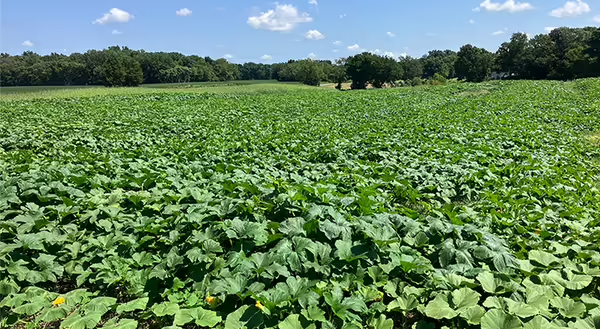
I had forgotten that it could actually rain in August! After the last few years of late summer droughts, the timely rainfall this year in our area has been much appreciated. It is nice to not have summer crops struggling for water and the soil being as hard as a brick. I have recorded 5.35 inches of rain for the month as of 8/28 which is far different than the last few years. Looking back in the past, the entire month of August I only had 0.63 inches in 2025 and 1.47 inches in 2024. We have still had lots of days in the 90s and some extreme humidity in the middle of the month, but temperatures have moderated to the 80s in the last week or so, providing a little reprieve from the intense humidity. Unfortunately, I don’t know that we are out of the woods for the heat yet as the forecast has some mid and upper 90s as we start September.
Just like I forgot it could rain in August, I also forgot just how many vines pumpkins could grow with heat and plentiful moisture. Both in trials and at home on the farm, pumpkins have vined out so much I am struggling to keep drive alleys open. I even had to mow out some pumpkins vines just to clear a path in some. So far, powdery mildew has been at bay with preventative sprays, and I have not had any reports of downy mildew as of now. I have seen just a few squash bug eggs and even did find a squash vine borer in a pumpkin plant, but so far, those pests have been fairly isolated. Don’t forget Pumpkin Field Day is September 3! More details are included in this issue of the IFVN including the topics for the day!
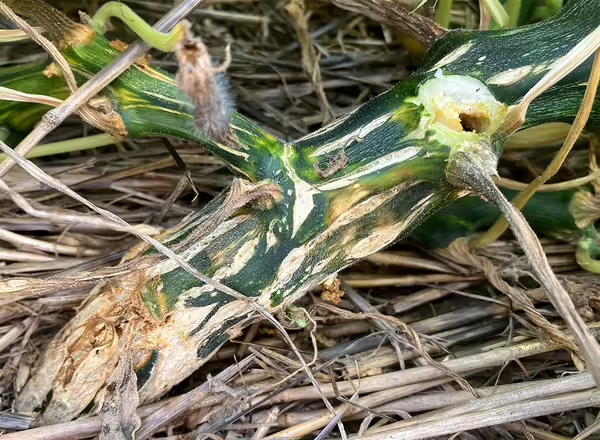
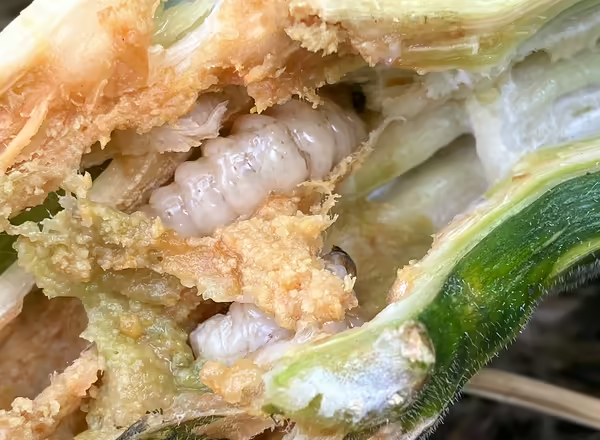
If you have a pumpkin plant suddenly yellow and wilt, check the base of the plant for a small hole about the size of a pencil eraser. If you see a hole, you can cut lengthwise through the middle of the stem, and you may very well find small white squash vine borers as seen in these photos.
Out in the field, early apples like Gala, Honeycrisp, and Jonathan are rolling in on local farms. The apple crop, overall, looks very good and we have had some cooler nights which have really helped the apples color nicely. The main peach season is winding down with later varieties like ‘Encore’ harvested about the middle of August, there are a few growers with some later varieties still coming in.
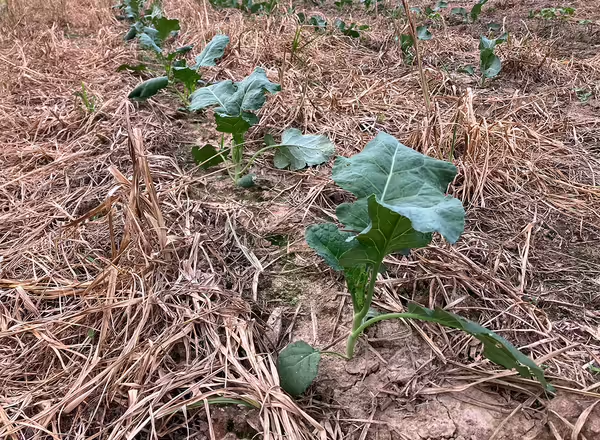
We still have a full range of vegetable crops in harvest, especially late season plantings. The moisture has been great for fall plantings. I have a fall planting of broccoli & cauliflower I no-till transplanted on 8/12 and within 48 hours we had over 1 inch of rain. With the moisture, they all established well and are off and growing. The biggest challenge for many fall crops, like cole crops, is insects. Caterpillars are plentiful and hungry this time of year. Scout regularly and keep on top of sprays and control measures as these pests can cause a lot of damage quickly. For cauliflower and broccoli, you especially need to be diligent once the small heads just start to form. If caterpillar pests get established under the dense head, it can be almost impossible to get spray to them. For these pests, Bt products like Dipel (organic approved) and then also the pyrethroid insecticides can be good first line products. I often start with Bt and later in the season when coverage is harder to achieve, I will switch to the pyrethroids. For complete details and spray recommendations check out the Midwest Vegetable Production Guide. Now is also the time to think about other fall crops like lettuce, spinach, turnips and peas.