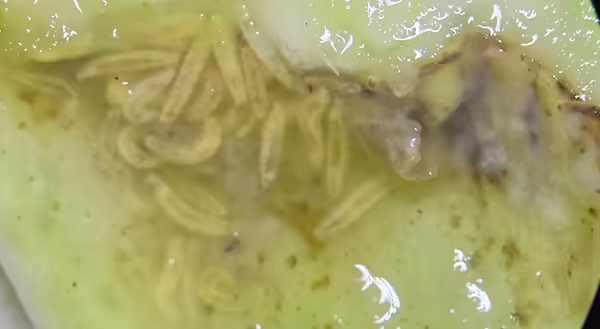
Swede midge is an invasive pest of brassicas introduced to North America in 2000 where it was detected in Canada. Since then, it has been detected in the United States, first in New York in 2004. In the North Central region the United States, Swede midge has been detected in Michigan, Ohio, Minnesota, Wisconsin, and was confirmed in Illinois in 2017 in Cook County.
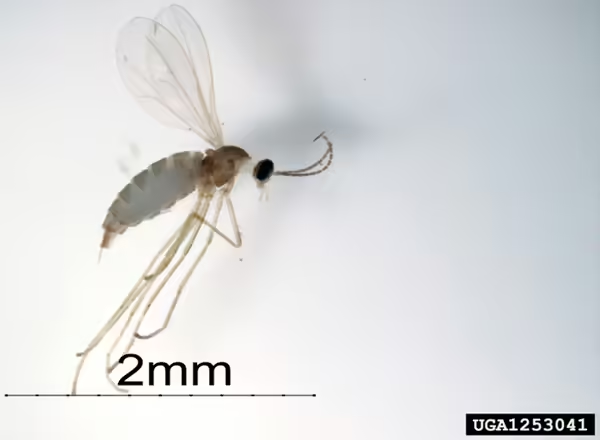
Adult Swede midges are very small flies, around 2mm in size. They are light brown to light orange. The larvae are 1-4 mm long and creamy white to yellow as they grow. They are difficult to identify and need a trained entomologist or DNA identification. Swede midges lay up to 100 eggs and their larvae feed on the growing points of young plants. The larvae take 7-21 days to complete development and have up to five generations per year.
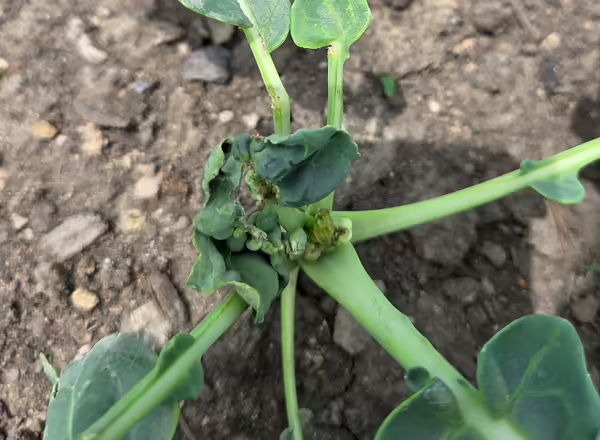
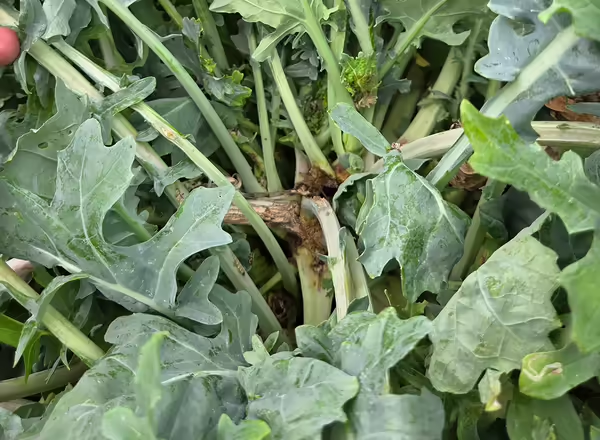
Swede midge is a pest of brassicas, especially kale (Russian red kale is especially vulnerable) and collards. It is difficult to identify and the damage it does is often mistaken for other pests, mechanical damage, or nutritional issues. Damage can include distorted growing tips, swollen and crumpled leaves, and brown scarring on petioles and stems. When large numbers of larvae are present, there may be a wet area that looks like rot. It does not spread any plant diseases, so its impact is due to direct feeding by the larvae. Adults are weak fliers, so they are likely spread by the movement of transplants opposed to the movement of the insect itself.
This summer our lab has been working with a grower in Cook County to test Russian red kale as a trap crop when growing collards. Since Russian red kale is the most preferred crop, we were hoping that the swede midge infestations and damage would be lower in the collards. We assessed swede midge damage through the growing season and counted swede midge larvae in the plants when the plant damage was extreme. Swede midge larvae were found in Russian red kale in higher numbers compared to collards, but we still found a fair amount of damage in the collards. This was our first small trial with this pest, and we hope to continue this work next summer.