
“Which maple should I plant?” is a question I routinely encounter. My response: “None!”
Maples (Acer spp.) aren’t bad trees. In fact, they are great trees. Drive down most streets, and you will see a maple in everyone’s yard. When speaking with landscapers about their inventory and what they sell more of than any other species, the answer is usually maples. We love maple trees.
The characteristics of red maple, sugar maple, or any of the various hybrids exemplify good fall color, decent growth rate, interesting bark, and ease of propagation. Their performance puts maple trees in the league of historically top-rated trees like American elm, green and white ash, and American chestnut.

Maples sound great! Why the discouraging tone?
My use of the term ‘historically’ has two connotations. The first indicates our historic use of the three aforementioned tree species in the United States. The second connotation refers to the fact that the American chestnut and most American elms have largely disappeared from their former dominance, while emerald ash borer has dramatically reduced ash populations across much of North America.
Like the maple that follows in their trend, ash, chestnut, and elm were all heavily planted. One by one, each tree species succumbed to a non-native, invasive pest. Today, our communities are grappling with the effects of the emerald ash borer and the vast emptiness left in our urban canopies. What’s being planted in the wake of millions of lost ash trees? You guessed it – maples.
Currently, the Asian long-horned beetle is a pest with the potential to devastate North America’s maple tree population. It has already been found in Illinois, and fortunately our methods for controlling this pest have been successful. But things change, pests adapt, and new threats emerge.
What can we do to avoid repeating our mistakes with monoculture urban forests? Don’t plant them! With the loss of our ash trees, American cities have a great opportunity to plant a diversity of trees. If any of your neighbors have a maple tree, plant something else. Go even farther and take a walk around your neighborhood to identify which tree species may be lacking and seek those out.
No maples? Okay, how can we diversify the urban canopy?
The obvious follow-up question to my response of “Don’t plant maples” is, “Well, what trees are recommended?” Or, "What would you plant?" Before I give you my list of trees, you need to know this is a tricky question to ask of a horticulture educator. It’s like asking me why my dog is my favorite dog. He chews on my kid’s toys, ruined my front door, destroyed our windows, and steals my children’s food, but I still love him and wouldn’t trade him in…most days. Because for all those negatives, his good qualities still outshine the stuffed animal innards scattered across the living room floor from this morning.
Here goes. My top ten list of trees:
- White oak, Quercus alba
- Bur oak, Quercus macrocarpa
- Black gum, Nyssa sylvatica
- Tulip poplar, Liriodendron tulipifera
- Sweetgum, Liquidambar styraciflua (Yes, sweetgum haters, you read that correctly. See my paragraph above about my dog.)
- Bald cypress, Taxodium distichum
- Kentucky coffeetree, Gymnocladus dioicus
- American beech, Fagus grandiflora
- American sycamore, Platanus occidentalis
- Hackberry, Celtis occidentalis
After reading this list, you may be asking, “What about oak wilt? Or beech leaf disease? And really, sweetgum!?” Every tree has a disease, an insect, or some fault, and that is why a diverse urban canopy is so important.


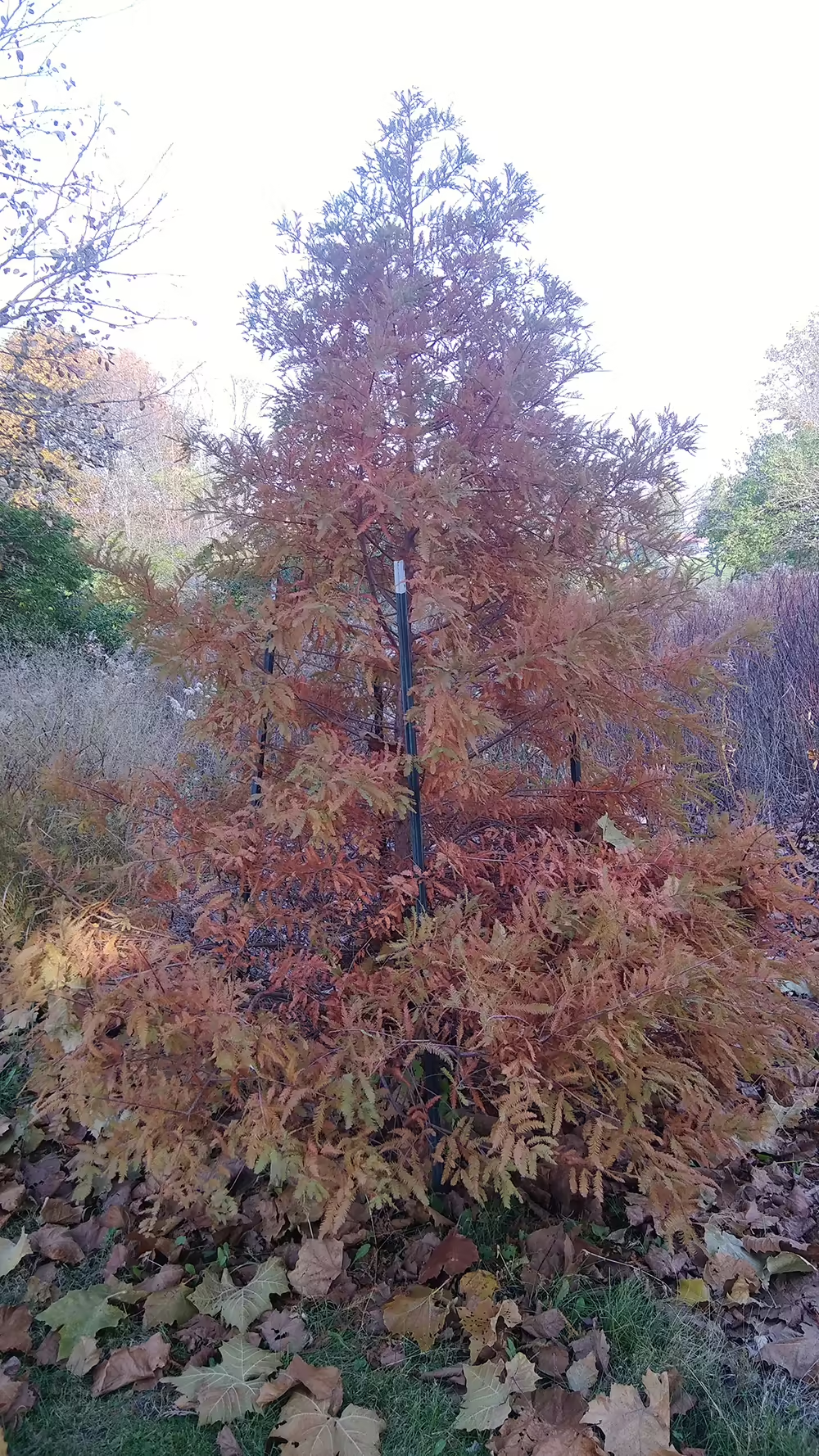
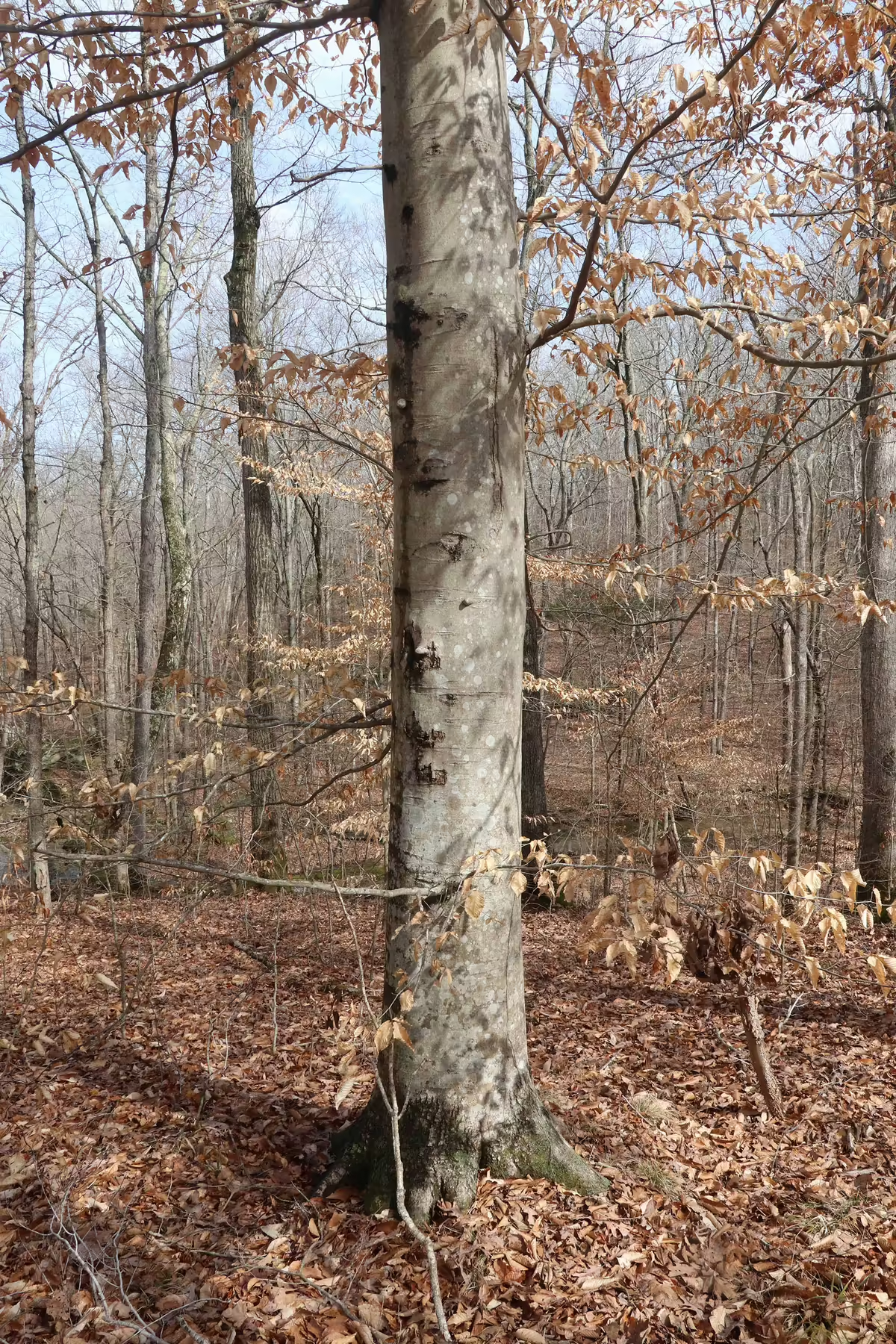

It is not my aim to make readers anti-maple, but instead to be pro-diversity for our urban canopies.
Need help identifying a tree after a neighborhood tree survey? Contact your local Extension office for tree-identification resources.
Good Growing Tip of the Week: While Asian longhorned beetle is not currently established in Illinois, it remains a serious invasive threat to maples nationwide. Closer to home, Verticillium wilt, drought stress, warming temperatures, girdling roots, soil compaction, and restricted rooting space are common causes of maple decline in our landscapes today.
Thank you for reading!
Sign up for our emails! Want to get notified when new Good Growing posts are available? SIGN ME UP
Give us feedback! How helpful was this information (click one): Very helpful | Somewhat helpful | Not very helpful
MEET THE AUTHOR
Chris Enroth is a horticulture educator with University of Illinois Extension, serving Henderson, McDonough, Knox, and Warren counties since 2012. Chris provides horticulture programming with an emphasis on the home gardener, landscape maintenance personnel, and commercial landscapers. Additional responsibilities include coordinating local county Master Gardener and Master Naturalist volunteers - providing their training, continuing education, advanced training, seasonal events, and organizing community outreach programs for horticulture and conservation assistance/education. In his spare time, Chris enjoys the outdoors, lounging in the garden among the flowers (weeds to most).