Welcome to the Summer 2026 edition of the Bureau, LaSalle, Marshall, and Putnam Ag Newsletter!
Emerging issues:
Seeing crops through a wet June in 2026
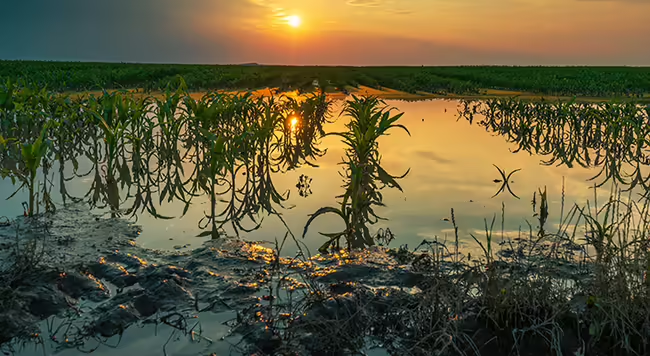
Heavy rainfall across much of Illinois during June left many fields saturated or flooded, contributing to declines in corn and soybean condition ratings. Yield losses will depend largely on how long fields remained waterlogged, as prolonged flooding can damage roots, limit nutrient uptake, and reduce crop growth. Encouragingly, many corn fields have shown strong recovery as soils dry, with warm temperatures and adequate moisture supporting rapid growth. Producers are encouraged to evaluate fields carefully before applying rescue nitrogen, as yellowing corn may reflect restricted root activity rather than a true nitrogen deficiency.
Corn leaf aphids – when to scout and what to expect
As corn begins to tassel, producers should scout for corn leaf aphids, particularly in hybrids that have shown susceptibility in recent years and in later-planted fields. Although severe infestations can reduce kernel formation and yield, corn leaf aphids remain an uncommon and sporadic pest in Illinois, and most fields are unlikely to require treatment. Natural enemies such as lady beetles, parasitoid wasps, and fungal pathogens often keep populations in check. An insecticide application may be justified if aphid colonies are present on about half of the plants during late vegetative through tasseling stages.
Asian copperleaf identified in Illinois
University of Illinois researchers have confirmed the first sighting of invasive Asian copperleaf (Acalypha australis) in Stephenson County—making Illinois the third U.S. state to host this weed. The summer annual grows 1–2 feet tall, spreads by seed, and can be tricky to identify without its mature flower bracts. Farmers concerned about its presence can reach out to University Extension experts for help with identification and response.
Contingency planning with cash flow shortages
Contingency planning can help farms prepare for cash flow shortages caused by lower-than-expected yields, commodity prices, or other financial challenges. Scenario planning can help producers assess how changes in prices or income may affect financial performance and guide decisions about delaying capital investments. When cash flow becomes tight, preserving liquidity and working capital may be more important than making large equipment purchases.
Weather updates:
Stormy June continued a wild weather year
Illinois experienced an exceptionally wet and stormy June, with a statewide average of 7.40 inches of precipitation—2.75 inches above normal and the fifth-wettest June on record. Central and northern Illinois received frequent heavy rainfall that led to flooding on several rivers, while parts of southern Illinois remained much drier. Despite near-normal average temperatures statewide, the month featured dramatic swings from unusually cool conditions in mid-June to intense heat at month's end. Severe weather was a major story, with at least 65 tornadoes reported during June and a record-setting 173 tornadoes statewide by July 1, highlighting an extraordinarily active year for severe storms in Illinois.
Weather outlook:
July is the climatologically hottest month of the year in Illinois and can make or break a growing season with its rain (or lack thereof). The latest July outlooks from the Climate Prediction Center continue to show equal chances of warmer, cooler, drier, and wetter than normal weather. The lack of a warm signal in the Midwest may speak to good chances of moving back into a cooler and wetter pattern in early to mid July, before having some more heat come back in later in the month. Should drought conditions begin to emerge as the growing season progresses, please report those at go.illinois.edu/cmor. For timely updates on everything climate and weather, check out the Illinois State Climatologist website.
Illinois producers invited to participate in weather forecast survey
Illinois farmers, agricultural professionals, and others involved in agricultural operations impacted by weather are invited to participate in a new survey examining how weather forecasts are used to support on-farm decisions.
Researchers from the University of Illinois are conducting the survey to better understand how Illinois agriculture uses weather forecast information. Results will help inform future weather tools, communications, and resources tailored to agricultural needs.
The survey will remain open through September 5th, 2026.
Research updates:
Rethinking Phosphorus and Potassium, Part 1: Soil Testing 101
Soil tests for phosphorus (P) and potassium (K) are useful tools for predicting whether crops are likely to respond to fertilizer applications, but they do not directly measure plant-available nutrients in the soil. This article reviews how soil testing has evolved in Illinois and explains that current recommendations are based on estimating crop response rather than nutrient supply. Bergschneider and Margenot suggest that future P and K management may be improved by placing greater emphasis on economic returns and nutrient removal rates, helping farmers make more precise and profitable fertilizer decisions.
How cracks in dry soil impact moisture evaporation
University of Illinois researchers found that cracks that develop in soils during drought can significantly accelerate moisture loss by increasing the soil surface area exposed to the air. Once cracks form, they can persist and reduce the soil’s ability to retain moisture, potentially worsening drought impacts.
Send us your ticks!
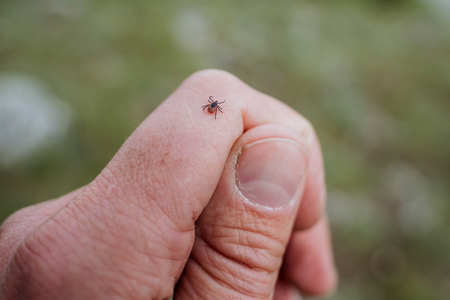
Help collect ticks from humans, pets, and livestock in your area. We are studying the movement of ticks, tick-borne diseases, and their impact. Your contribution provides vital data to enhance our understanding of ticks and disease prevention, helping to protect humans, pets, and livestock. Ticks are on the move, increasing the risk of diseases such as Lyme disease and Alpha-gal syndrome in humans, as well as Anaplasmosis in livestock. Learn more about ticks sightings in your area at bitemap.illinois.edu. If you find ticks on yourself, your pets, or your livestock, please bring them in to the Illinois Extension office in Ottawa in a plastic baggie labeled with the date and location.
Additional resources:
The Illinois Agricultural Mental Health Voucher Program connects agricultural producers and their families with local mental health professionals. This program enables producers to seek mental health services at no cost to the producer and their family. For more information visit go.illinois.edu/MentalHealthVoucher
American Farmland Trust (AFT) and Cargill have partnered to create educational videos for corn and soybean farmers interested in adopting soil health practices, including cover crops, reduced tillage, and nutrient management. The videos feature farmers with varying levels of experience implementing soil health practices and sharing stories about adopting a variety of practices. To view the videos visit AFT's website.
To learn more about our upcoming programs and events:
Follow us on Facebook!
Check out our website!
Join our email list!
As we continue to develop new local ag programs, your opinion matters to us. Fill out our program preference survey to let us know what you want to see!