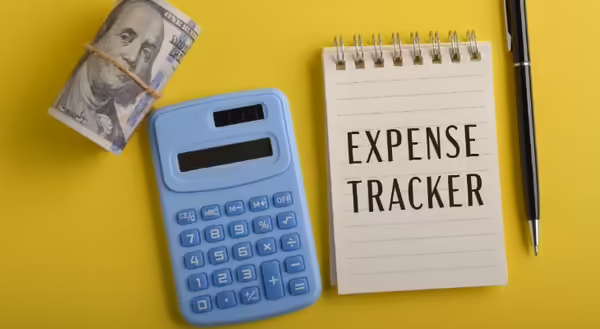
With consumer costs remaining high, now is a great time to start tracking your daily expenses. Research suggests that financial literacy, mental budgeting, and self-control all play important roles in financial well-being (Bai, 2023). One simple way to strengthen these skills is by monitoring where your money goes each day.
Choose a tracking method that works best for you. Whether you prefer a financial app, a spreadsheet, or a simple notebook and pencil, the key is finding a system you can use consistently. The Consumer Financial Protection Bureau (CFPB) offers a basic spending tracker that can help you get started (Dantus, 2019).
Research shows that mentally categorizing and tracking expenses is associated with higher levels of financial well-being (Bai, 2023). Keeping your finances at the forefront of your mind can help you gain a clearer understanding of your financial situation and make more informed spending decisions. While practicing self-control around spending can be challenging, having an accurate picture of your finances can support better decision-making.
Tracking expenses also increases awareness of your spending habits. Taking the time to document purchases helps you see exactly where your money is going. Knowing that you will be recording an expense may even cause you to pause and reconsider an unnecessary purchase. Over time, developing the habit of connecting spending decisions with their financial impact can influence future choices and support long-term financial goals.
Although daily expense tracking may seem time-consuming at first, it can be a valuable tool for improving financial wellness. As you review your spending, take a moment to reflect on your purchases and spending patterns. The CFPB (2019) suggests asking yourself questions such as:
- What expenses surprised you?
- Were there purchases that now seem unnecessary?
- Are you paying for services or subscriptions that you rarely use?
- Are there fees associated with credit cards or other financial services that could be reduced or eliminated?
- How does your spending on weekdays compare with your spending on weekends?
Improving financial wellness is a journey, and small changes can make a meaningful difference over time. Consider giving daily expense tracking a try and see what you learn about your spending habits and financial priorities.
References
Bai, R. (2023). Impact of financial literacy, mental budgeting and self-control on financial wellbeing: Mediating impact of investment decision making. PLOS ONE, 18(11), e0294466. https://doi.org/10.1371/journal.pone.0294466
Dantus, C.-R. (2019, June 11). Track your spending with this easy tool. Consumer Financial Protection Bureau. https://www.consumerfinance.gov/archive/blog/track-your-spending-with-this-easy-tool/
Title
Meet the Author
Jamie Mahlandt is a Financial Educator for Bond, Clinton, Jefferson, Marion, and Washington counties in Southern Illinois. She provides financial education to the local community with an emphasis on financial literacy and financial well-being.
Title
Subscribe
Subscribe to blog updates HERE.