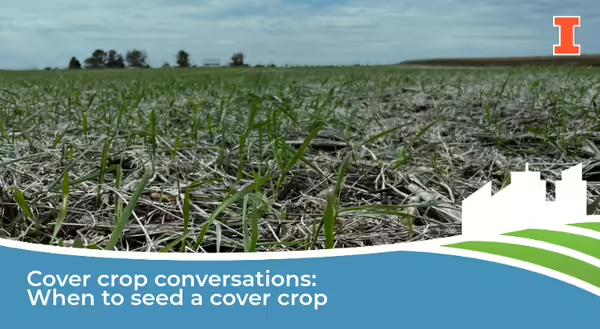
When it comes to seeding cover crops, timing matters, but the right timing can look different depending on where you farm and what you are trying to accomplish.
In Episode 85 of the Illinois Nutrient Loss Reduction Podcast, three Illinois farmers share how they approach cover crop seeding dates across different parts of the state. Adam Dahmer farms in Williamson County in southern Illinois, Brent Fowler farms in McDonough County in west-central Illinois, and Greg Thoren farms in Jo Daviess County in northwestern Illinois.
The fourth installment of the Cover Crop Conversations series discusses how geography, weather, cover crop species, and harvest timing can affect seeding decisions. The farmers also discuss what is happening underground when fall-seeded cover crops show little visible growth above the soil.
Seeding date depends on where you are
Dahmer said the seeding date is extremely important, but there is not one date that works everywhere. He recommended using the Midwest Cover Crops Council seeding date charts, which provide location-specific information for cover crop species.
Weather conditions also change from year to year. Dahmer said his operation was able to drill ryegrass following a late soybean harvest one year because soil temperatures remained warm into the fall. Under cooler or wetter conditions, he said the outcome could have been different, and he would have needed to change his plan.
The species being planted matters, too. Dahmer said legumes generally need to be established earlier than cereal grains. In his area, crimson clover stops growing earlier than vetch, while cereal rye can be seeded later into the season.
Look below the soil surface
For many cover crop species, limited growth above ground in the fall does not mean the plant is inactive. Dahmer explained that fall-seeded cover crops prioritize root development during establishment rather than producing significant above-ground biomass. For overwintering species, a strong root system is essential for surviving winter and supporting growth as soil temperatures warm in spring. Even when little foliage is visible, those roots are hard at work anchoring the soil to reduce erosion from wind and water, capturing nutrients that might otherwise be lost, and supporting biological activity by feeding microbes and contributing to the buildup of organic matter.
Fowler has seen the same thing in west-central Illinois. His operation primarily uses cereal rye and has seeded it in November. While it may not produce much above-ground biomass during the winter, he said it generally starts growing again in the spring.
Farther north in Jo Daviess County, Thoren has also seen cereal rye and winter wheat establish roots without producing much visible aboveground growth.
Adjust the mix for conditions
Dahmer uses other species in a cover crop mix to help protect plants heading into winter. When planting crimson clover ahead of corn, for example, he may include spring oats.
Oats can grow quickly in the fall and provide some protection from cold winter winds for plants such as crimson clover or ryegrass. The oats winterkill, while the overwintering species remain.
Thoren also uses mixtures following his soybean harvest. His operation may include several plant families, such as legumes and brassicas, along with a small amount of wheat, ahead of corn. He said those species may not produce much growth before frost, particularly in northwestern Illinois, but he still sees value in having different plants and roots growing in the soil.
Late harvest does not always mean it is too late
Harvest timing can make cover crop establishment more challenging, but Dahmer said farmers have more than one option. When harvest is late, his operation may aerial-seed the cover crop into the standing cash crop rather than waiting until after harvest. Ideally, he likes to see several inches of cover crop growth by the time corn is harvested, so the plants can respond quickly once more sunlight reaches them.
Fowler said his experience with cereal rye has also changed how concerned he is about getting it seeded early. While he still tries to seed as early as possible, he has successfully established cereal rye later in the fall.
In northwestern Illinois, Thoren has pushed cereal rye seeding even later in certain years. He emphasized that the weather, the species being planted, and seed quality all play a role in the success of those later seedings.
The bottom line
There is not one cover crop seeding date that works across Illinois. The experiences shared by Dahmer, Fowler, and Thoren show how much seeding decisions can depend on location, weather, species, and the goals for the cover crop.
When deciding when to seed, consider:
- Using location-specific seeding information when planning cover crop establishment
- Paying attention to soil temperatures and weather conditions
- Knowing which species need to be established earlier, and which can tolerate later seeding
- Remembering that limited fall growth above ground does not mean roots are not developing
- Aerial seeding, when waiting until after harvest, could push establishment too late
- Adjusting cover crop mixes based on the conditions and what you want the cover crop to accomplish.
To hear the full conversation, listen to Episode 85 of the Illinois Nutrient Loss Reduction Podcast. For location-specific cover crop seeding information, visit the Midwest Cover Crops Council and its Cover Crop Decision Tool.
Explore more
About the blog
At Illinois Extension, we’re working to improve water quality at home and downstream. Every month, our Watershed Outreach Associates bring you stories highlighting agricultural conservation practices, current research, and insights from the field. The Nutrient Loss Reduction blog covers conservation practices recommended by the Illinois Nutrient Loss Reduction Strategy, provides timely updates, and offers decision tools to help farmers reduce nutrient losses from their fields.
About the authors
Rachel Curry is an Agriculture and Agribusiness Educator specializing in agriculture and watershed education, and a member of the Illinois Extension's Nutrient Loss Reduction Strategy implementation team. She holds a B.A. in Environmental Studies from Knox College and an M.S. in Environmental Science and Soil Science from Iowa State University, with a focus on soil fertility. Her work centers on education and outreach related to the Illinois Nutrient Loss Reduction Strategy, promoting agricultural conservation practices that reduce nutrient loss and enhance water quality and soil health across the state.
Nicole Haverback serves as a Watershed Outreach Associate and is an Illinois Extension team member implementing the Nutrient Loss Reduction Strategy. She holds a B.S. in Agricultural and Rural Policy Studies from Iowa State University. In her role, Nicole coordinates watershed management efforts to reduce nutrient losses in two nitrate-nitrogen priority watersheds, provides expertise on best management practices to minimize nutrient losses, and leads outreach initiatives that promote agricultural conservation practices outlined in the Illinois Nutrient Loss Reduction Strategy.
Luke Zwilling serves as a Watershed Outreach Associate and is an Illinois Extension team member implementing the Nutrient Loss Reduction Strategy. He grew up on a farm in Jasper County and earned a B.S. in Agriculture and Biological Engineering from University of Illinois. Luke coordinates watershed-based activities to reduce nutrient loss in two phosphorus-priority watersheds, provides expertise on best management practices for reducing nutrient loss, and conducts outreach on agricultural conservation practices within the Illinois Nutrient Loss Reduction Strategy.