Commercial Fruit and Vegetable Growers 2026
The
2026-2027 Midwest Fruit Pest Guide has been updated and the PDF files are available for download. New this year, the spray guide has been divided up into separate sections by fruit family and you can download specific sections, making it...
Finish this story
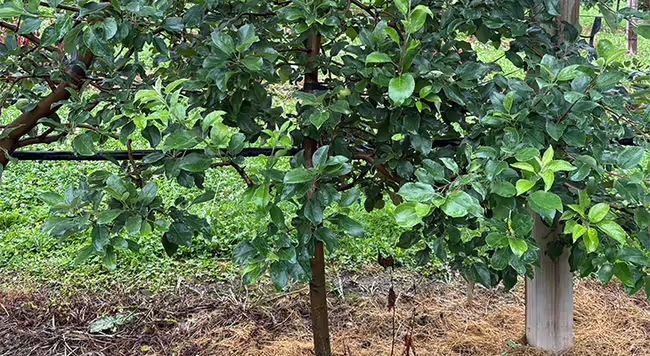
May is a critical month for assessing winter trunk damage because trees are fully leafing out and water demand is increasing. Differences in vigor among cultivars and rootstocks that were subtle during bloom are often more obvious now. Along with thinning decisions, this is a good time to evaluate...
Finish this story
Trent Ford, Illinois State Climatologist, provided this article.April has continued our very warm and active spring, with average temperatures that have been 5 to 10 degrees warmer than average statewide (Figure 1). The warmth has pushed soil temperatures into the 60s and 70s statewide, well ahead...
Finish this story
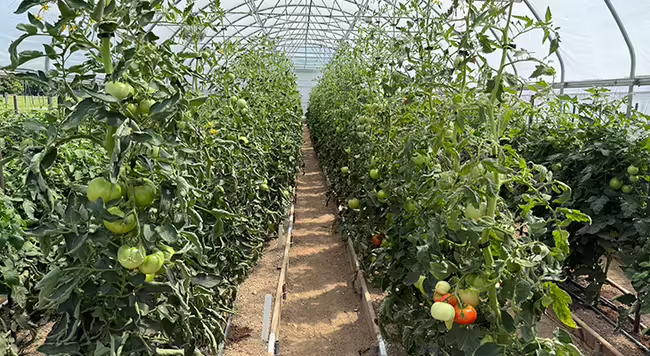
Tomato and pepper variety trials are being conducted in one of the high tunnels at DSAC, with a planting date of April 6. Tomato variety trials will consist of 5 determinate varieties, 6 indeterminate varieties, and 6 bell pepper varieties. In anticipation of the indeterminate varieties growing...
Finish this story
One final regional update from Elizabeth Wahle. And the cycle begins again for 2026. Asparagus harvest is ongoing and a good crop overall is being reported. Plasticulture strawberries are in week two of harvest and as usual for early berries, could benefit from some heat and...
Finish this story
If you established a cover crop last fall or earlier this spring, the persistent April rainfall likely worked in your favor. Across northern Illinois, April weather was highly variable but ultimately warmer and much wetter than normal, shaping planting conditions throughout the western Chicago...
Finish this story
Bloom PeriodBy the time you read this, most fruit trees in northern Illinois will have bloomed. When I visited an orchard in mid‑April, most cultivars were at tight cluster to half‑inch green. Just a week later, some cultivars had already entered late pink and even bloom. This...
Finish this story
When I started with Extension, I was fresh out of my Ph.D. program with Dr. John Masiunas…and really wet behind the ears compared to what I know now. I have so many people to thank for sharing their expertise and friendship throughout my career, including colleagues, growers, and support...
Finish this story
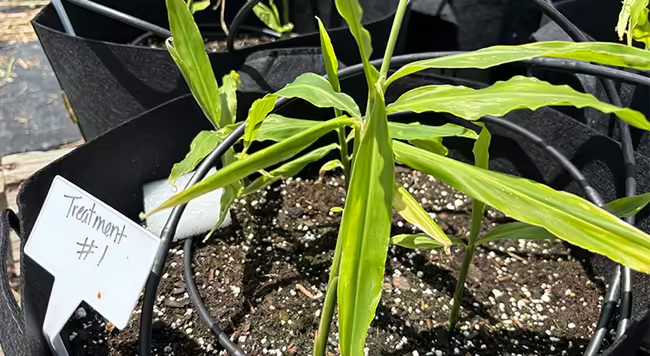
Heading into year two of the Illinois Ginger Growers Collaborative project, fourteen small farmers and six Extension field staff have just received their ginger rhizome seed pieces. Four varieties of ginger rhizome seed from two different vendors are being evaluated for vigor, disease incidence or...
Finish this story
Listeriosis is a disease caused by the bacteria called
Listeria monocytogenes. Listeriosis is often acquired from consumption of food contaminated with
Listeria monocytogenes. Foods often...
Finish this story
The mid March cold snap brought temperatures in the 18 to 22 degree range across southern Illinois. Double row covers on plasticulture strawberries did not provide enough protection to save flowers from popcorn up to full bloom in maturity. Flowers in tight bud were saved for the most part. As of...
Finish this story
We have been on the spring roller coaster for temperatures in southern Illinois. March 15-17 saw temperatures plummet, with March 16 not even getting above freezing. We saw lows down to the upper teens across the area. However, by the weekend we were pushing 90 degrees for high...
Finish this story
Over the last 5 years, efforts have been made at the Unity Community Center’s Research and Demonstration Area Garden in Normal, IL to rejuvenate garden soils used for food-insecure community food production through extensive cover crop utilization. This approach was taken due to the condition...
Finish this story
The luck of the leprechauns may have been with growers this St. Patrick’s Day. By that I mean apples and peaches in Southern Illinois were/are all in bud development stages sensitive to below freezing temperatures, and we definitely got below freezing. Where the luck came in is...
Finish this story
In February, the USEPA announced that three dicamba-containing products were approved for over-the-top (OTT) applications in soybean fields in 2026, with validity for only two years pending further review. Those three products are: Stryax (Bayer), Engenia (BASF), and...
Finish this story
On the night of March 4, a severe storm system came through southern Illinois which consisted of high winds, hail, and very heavy rain. That system dropped over 5 inches of rain across the region, but specifically at the location of the Dixon Springs Ag Center, multiple large trees were downed and...
Finish this story
When I studied red knight bell peppers (X3R from Johnny’s Seeds) in South Dakota for graduate school, they loved the 90-degree Fahrenheit temperatures, possibly because of how dry and arid it was. Last summer, I really struggled with bell peppers as it was hot and humid with fluctuating...
Finish this story
After the success of solarizing cover crops last year in our high tunnel, we will be covering all the beds with clear plastic mulch to achieve termination ahead of our April 1 target plant date for tomatoes and peppers. Plastic is stapled into the wooden side boards of the raised beds, spanning two...
Finish this story
Our 30th Annual Stateline Fruit and Vegetable Growers Conference was held on Monday, February 16, in Rockford. Nearly 120 growers and community college students attended this event, which focuses on timely updates for fruit and vegetable growers in Northern Illinois and Southern Wisconsin. We were...
Finish this story