Along with sardines, jicama, and pawpaw, tomatillos are on the list of foods I probably never would have eaten, if not for my job where people ask me about food. It's to my benefit to learn about foods I know nothing about. But I didn't grow up eating tomatillos, and adding in something new is full of uncertainty. What will it taste like? Do I know if it's ripe? Did I just waste my money?
If you see a new-to-you food in a store or farmers market, I encourage you try new flavors and varieties. Expanding the types of foods you eat gives you a wider mix of nutrients for a healthier diet. But trying new foods is easier said than done.
Ways to Grow Your Confidence Before You Buy
- Do I even like this flavor? Start by buying pre-made products, such as jarred salsa verde or a frozen meal that includes tomatillos. It's on a store shelf because the company made it tasty enough. If small packages are available, try those for the first taste. In case you don't like it, there's less wasted.
- Take a second taste, even a third. The first taste of a new food, especially fruits and vegetables, might feel odd. Your taste buds are experiencing something new. That second or third taste helps you gain confidence to decide if the flavors and texture are ones you enjoy.
- What do others do? If you do like this new food and want to do more, watch videos or read blog posts about that food. Seeing or reading how other prepare or work with a food provides information to use if you want to do it yourself.
- I'm ready to DIY. If you decide this food is worth buying or it's worth making the recipe yourself, go for it! Gather those ingredients and equipment and try it out.
Nutrition
Nutritionally, a medium tomatillo contains a wide variety of vitamins and minerals, including vitamins A, C, E, and K, a mix of B vitamins, potassium, magnesium, and iron. Tomatillos are mostly water and low in carbohydrates, fat, and protein.
Shop
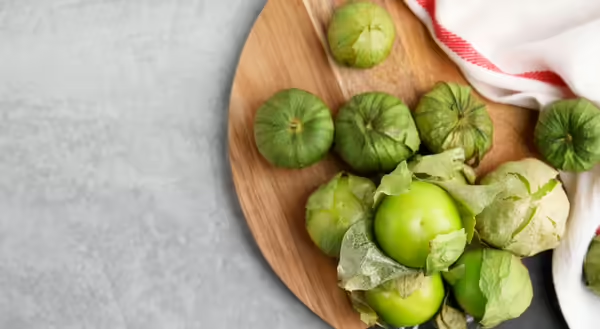
- Fresh. Some stores carry fresh tomatillos in their produce section. Look for firm fruit with their dry, papery husk on the outside. Avoid tomatillos with brown spots or mold. Most grocery stores will sell bright green varieties, although you may find other colored varieties at farmers markets.
- Jarred. Stores may sell canned whole tomatillos or jarred salsa verde, a product similar to tomato salsa but using tomatillos. Many brands add salt to these jarred foods. Look for lower sodium options, if available.
Price
Price of fresh tomatillos will vary by region and time of year, but are often priced similar to tomatoes.
Store
After buying, tomatillos can be stored short-term at room temperature in a cool area out of direct sunlight. For longer storage of several weeks, add to a paper bag and move to a refrigerator. The husks can remain on during storage.
Prepare
Remove husks and rinse well to remove the stickiness the husks leave behind. Discard the husks and remove the tomatillo's core.
Preserve
For long-term storage, consider freezing, drying, or canning tomatillos.
- Freezing. After cleaning, keep whole or cut into pieces. To keep individual tomatillos or pieces separate, freeze flat on a baking sheet and move to ziptop bags or hard-sided containers.
- Drying. After cleaning, cut tomatillos into slices or small pieces. Lay out in a single layer on drying trays and dry with an electric dehydrator until completely dry. Once cooled, move to a container with a lid. Like dried tomatoes, rehydrate dried tomatillos by covering with boiling water and letting sit for 5 minutes.
- Canning. The National Center for Home Food Preservation has three tested canned tomatillos recipes:
Eat
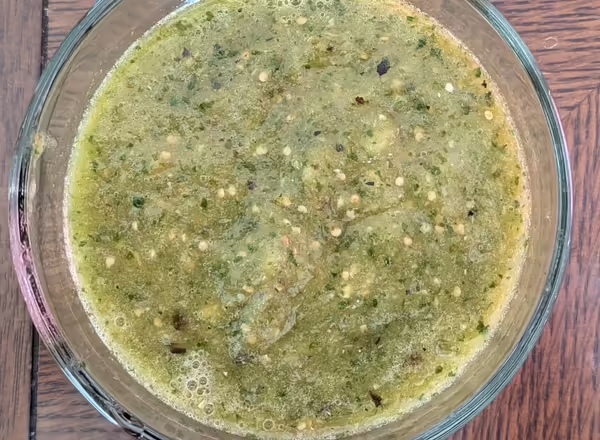
Salsa verde might be the common use of tomatillos. Offer it with tortilla chips for something different from tomato salsa. Or use it as a sauce over chicken, fish, or pork. Cook the salsa with rice for a spicy green-colored rice or other grains to serve with a Tex-Mex inspired meal. I like to use salsa verde in place of green chilis in white chicken chili.
Resources:
- Kansas State University Extension, Seed Library Resources, Tomatillo, N/D
- Oregon State University Extension, Preserving tomatillos, 2025
- South Dakota State University Extension, Tomatillo: How to Grow It, 2025
- University of Minnesota Extension. Real Life, Good Food. Tomatillos, N/D
- U.S. Department of Agriculture, FoodData Central
Post originally published in 2019; content updated in 2026.
About the Author: Caitlin Mellendorf is an Illinois Extension Food and Nutrition Educator serving DeWitt, Macon and Piatt Counties in Central Illinois. She is a Registered Dietitian and her work focuses on helping community members gain the knowledge, skills and tools to live healthier, more nutritious lifestyles. This includes providing programs and answering questions about heart health, diabetes, food safety, food preservation, grocery shopping and cooking. You can reach Caitlin by email at chuth2@illinois.edu or call 217.877.6042.